

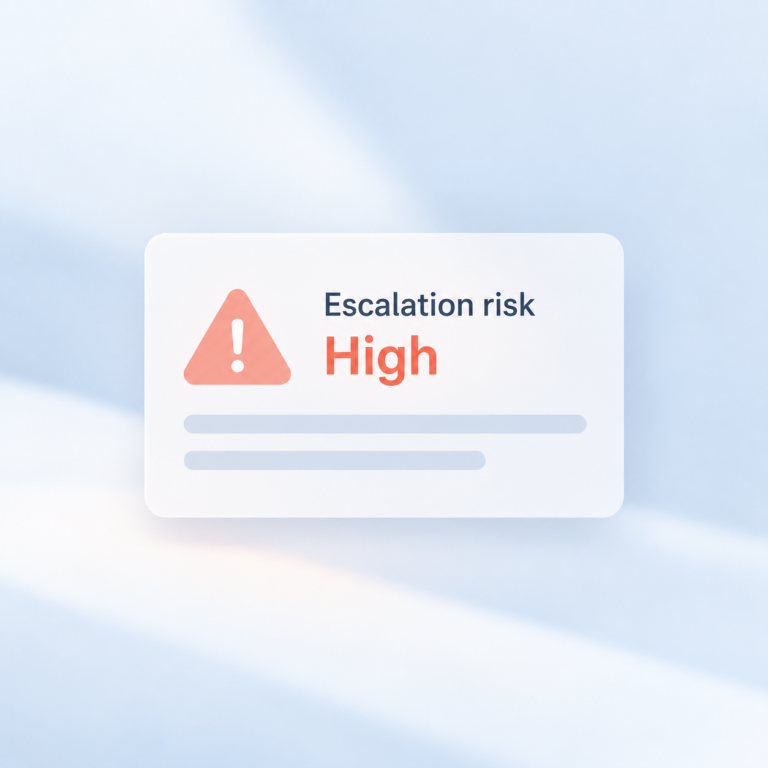
AI Escalation Detection in Field Service: Early Warning Signs and Actions
AI can detect service jobs that are likely to escalate by identifying warning signs before they develop into customer complaints, SLA breaches, or repeat visits. These signals include recurring equipment failures, missed appointments, technician delays, missing parts, repeated customer contacts, and jobs that take longer than expected. By combining historical service records with current operational […]

Why Offline-First FSM Still Matters in 2026
Offline-first FSM still matters in 2026 because field service work often happens in places where mobile connectivity is weak, unstable, restricted, or completely unavailable. A technician should still be able to open the work order, review asset history, follow the required steps, and record the outcome without waiting for a signal. Cloud platforms, AI tools, […]

When Should Dispatchers Override AI Recommendations?
Dispatchers should override AI recommendations when the system is working with incomplete information, missing important customer context, creating a safety or compliance risk, or improving one assignment at the expense of the wider service day. An override is also justified when a dispatcher has reliable, current information that the AI cannot yet see. The aim […]

How AI Agents Are Changing the Dispatcher Role
AI agents are changing the dispatcher role by handling routine coordination while leaving complex service decisions with people. They can collect job details, suggest assignments, monitor schedule changes, send updates, and flag exceptions that need attention. This does not make the dispatcher unnecessary. It shifts the role away from constant administration and toward judgment, customer […]
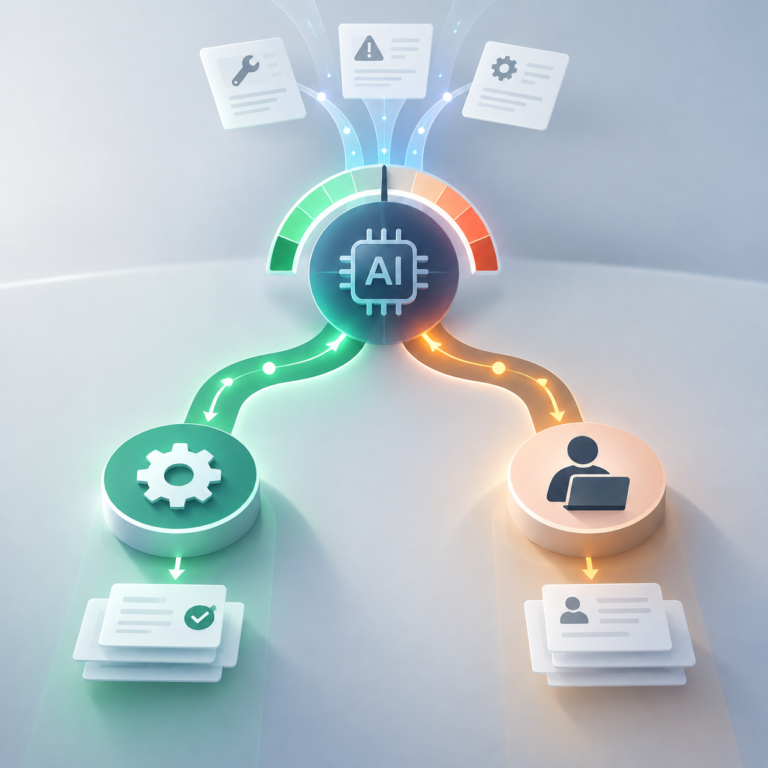
How AI Confidence Scores Improve Service Triage
AI confidence scores can improve service triage by indicating how strongly an AI system supports a recommendation. However, the score should not automatically be treated as the probability that the recommendation is correct; that interpretation depends on how the model produces, calibrates, and validates its confidence scores. Instead of simply labelling a job as urgent, […]

Digital Proof of Service Is Moving Beyond the Customer Signature
Digital proof of service is moving beyond the customer signature because a signature only confirms that someone was present to sign. It does not show what the technician found, what work was completed, whether the asset was tested, or what happens next. A stronger service record may include arrival and completion times, asset identification, before-and-after […]

How AI Predicts Parts Demand Before Service Visits
AI predicts parts demand before service visits by comparing a new job with patterns from past repairs, asset histories, fault codes, technician usage, seasonal demand, and current inventory. It cannot guarantee which component will be needed, but it can identify the most likely parts and help the team prepare before the technician leaves. That changes […]

AI in Field Service: Real Applications from Major FSM Software Providers
A lot of content about AI in field service remains too generic. It talks about “optimization” and “intelligence” without showing what vendors are actually doing inside the workflow. The clearer way to look at the market is by use case. Today, the most concrete AI applications from major FSM vendors show up in five places: […]

Why Automation Matters in Field Service Workflows
Field service gets more complicated long before most teams admit it. At first, the workflow may still feel manageable. Jobs come in, coordinators assign work, technicians move through the day, and customers get updates when needed. But as volume grows, the weak points start showing. More manual follow-up is needed. More schedule adjustments happen during […]

How Voice AI Is Improving Service Intake
Service intake has always been one of the most overlooked pressure points in field service. Everyone notices dispatch when the board gets messy. Everyone notices technicians when jobs run late. But the intake stage often gets less attention, even though it shapes everything that happens after it. A weak intake process creates vague tickets, missing […]