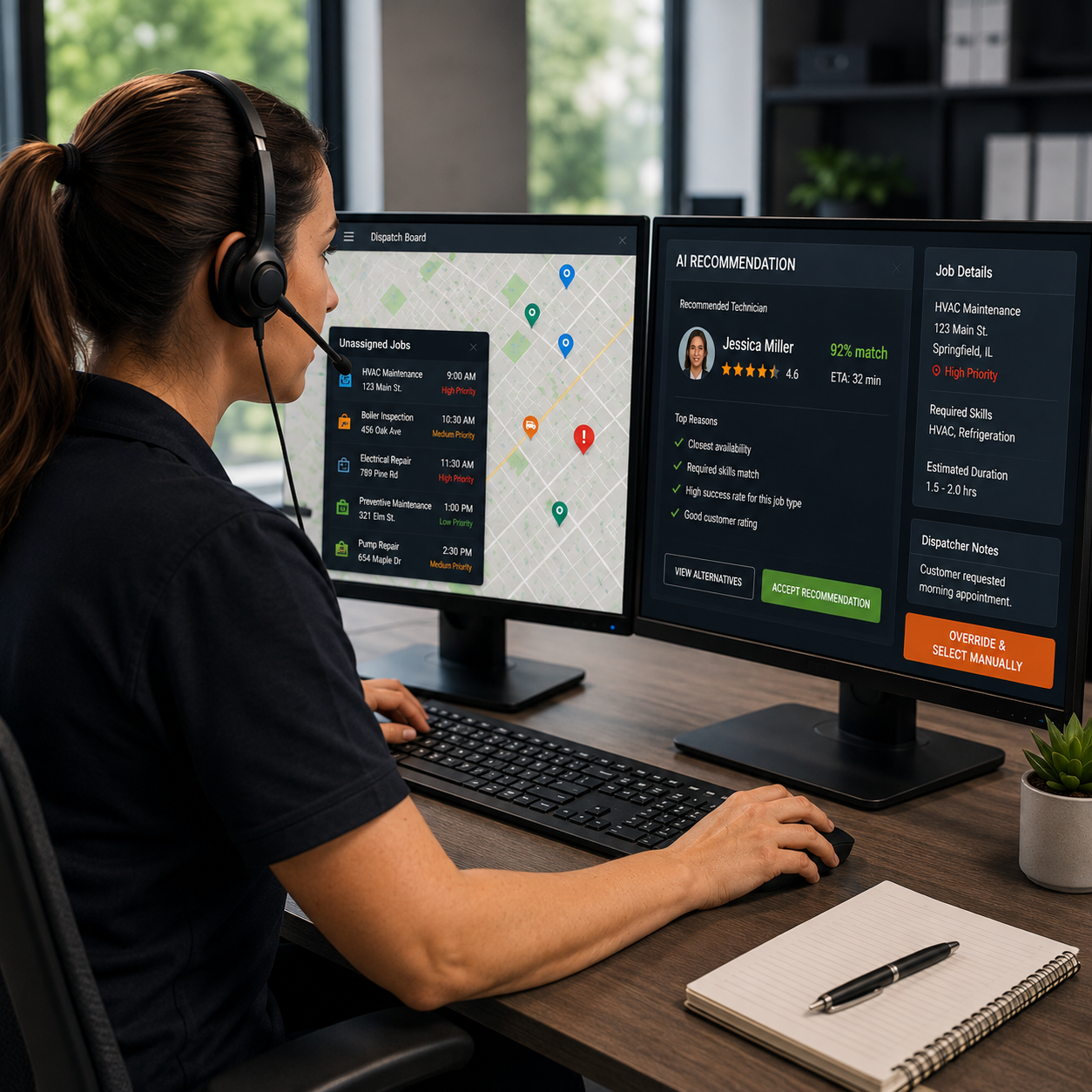
Dispatchers should override AI recommendations when the system is working with incomplete information, missing important customer context, creating a safety or compliance risk, or improving one assignment at the expense of the wider service day. An override is also justified when a dispatcher has reliable, current information that the AI cannot yet see.
The aim is not to challenge automation whenever it produces an unexpected answer. AI can compare technician skills, locations, availability, job priorities, routes, and service commitments faster than a person can do manually.
Human intervention matters when the recommendation looks efficient on screen but does not make sense in the real operation.
Override When the Information Is Weak or Outdated
Every AI recommendation depends on the data available to it. If the job description, asset record, technician status, parts information, or customer details are wrong, the recommendation may also be wrong.
A ticket that says “unit not working” gives the system very little to work with. It may assign the nearest general technician even though the customer is reporting a fault on specialist electrical equipment.
The dispatcher should pause when basic information is missing. A quick call to confirm the asset model, fault code, site access, or symptoms may completely change the best next action.
The same applies to technician data. The system may show that someone is available, while the dispatcher knows the technician is still finishing a difficult repair or has reported a vehicle issue that has not yet reached the platform.
This is why better job data improves dispatch decisions. AI can process information quickly, but speed does not compensate for weak inputs.
An override should be based on evidence rather than instinct. The dispatcher should be able to explain what the system was missing and why the alternative is stronger.
Override When Safety or Customer Risk Changes the Decision
Some jobs carry risks that ordinary scheduling logic cannot handle safely. Gas leaks, electrical hazards, medical equipment failures, trapped passengers, and industrial incidents need stricter human review.
A system might recommend the fastest available technician based on distance and certification. The dispatcher may know that the site requires additional security clearance, a second technician, or a customer-specific safety procedure.
That context should take priority. A slightly slower response is better than sending someone who cannot safely enter the site or complete the work.
Customer history matters too. An appointment may appear routine, but the account may have experienced repeated failed visits, a formal complaint, or a serious SLA breach.
The dispatcher may therefore choose a senior technician, protect more time for the visit, or arrange direct communication before arrival. Customers usually want confirmation that the issue is active, a realistic appointment window, and a clear next step.
Override When One Assignment Damages the Wider Schedule
AI often optimizes against defined goals. It may try to reduce travel, protect an SLA, fill a schedule gap, or assign the strongest technical match.
The recommendation can still create a wider problem. Moving one technician to an urgent job may leave another customer without coverage, push someone into overtime, or remove the only specialist available for a later appointment.
The dispatcher should look beyond the individual ticket. The better question is not only, “Can this technician do the job?” but also, “What happens to every affected appointment if I make this change?”
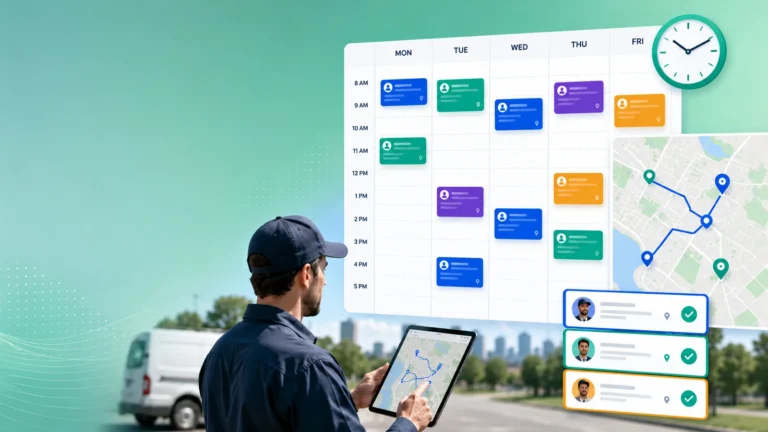
This is where smart field service scheduling matters. A strong schedule must remain workable when priorities change during the day.
Technician workload also deserves attention. An algorithm may see space for another visit without knowing that the previous job involved heavy physical work, a stressful customer, or unusually difficult conditions.
Human judgment is especially valuable when several options are close. A dispatcher may choose the assignment that avoids a fragile route, protects technician wellbeing, or keeps emergency capacity available.
Repeated overrides for the same reason may show that duration estimates, technician profiles, or scheduling rules need improvement.
A Real Service Situation Shows When to Step In
Imagine a company that maintains backup generators for hospitals and commercial buildings. An AI scheduling system receives an urgent alert from a hospital where a generator has failed a routine self-test.
The system recommends a technician who is 20 minutes away, has the right general certification, and appears to have enough time before the next appointment.
The dispatcher notices two important details. The technician has never worked on that generator model, and the hospital requires an access credential that only two engineers hold.
Another engineer is 35 minutes away but has repaired the same model several times and already has the required clearance. The dispatcher overrides the AI recommendation and assigns that engineer.
The hospital receives confirmation, a 45-minute arrival window, and instructions to keep the secondary backup system active. The dispatcher also shares the failed test code and confirms that the likely control module is available in the engineer’s van.
The engineer enters without delay, identifies the control fault, and restores the generator during the first visit. The original recommendation offered a shorter drive, but it could have caused an access failure, a slower diagnosis, or another dispatch.
This is a strong override because it uses specific operational facts. It does not reject AI simply because the dispatcher prefers a familiar decision.
Make Overrides Visible and Useful
Overrides should be a normal, controlled part of the workflow. Dispatchers should be able to reject a recommendation, choose an alternative, and record a short reason without using private notes or spreadsheets.
Useful reason codes may include missing skill, incorrect availability, safety requirement, customer escalation, access restriction, parts mismatch, or wider schedule risk.
This creates an audit trail and helps the business improve the system. If dispatchers repeatedly reject assignments because certifications are missing, the technician records need attention.
If overrides happen because travel estimates are unrealistic, the routing model may need adjustment. If one customer always needs manual handling, those account rules should be added to the workflow.
Strong exception management follows the same principle. The aim is not to eliminate unusual situations but to give people a clear response path.
Service leaders should review override rates, reasons, and outcomes. They should compare the AI recommendation with the dispatcher’s choice and measure arrival time, completion rate, SLA performance, customer impact, and technician workload.
A high override rate may reveal weak data or an AI model that does not understand the operation well enough. A very low rate is not automatically positive, because dispatchers may be accepting poor recommendations when overrides are difficult or discouraged.
The right model uses AI-supported field service dispatch for routine decisions while keeping experienced people responsible for higher-risk exceptions.
Dispatchers should override AI recommendations when they have stronger evidence, see a risk the system has missed, or understand a wider consequence that is not reflected in the recommendation. They should not override simply because automation feels unfamiliar.
The best service operations use AI to reduce routine decision pressure and dispatchers to protect the moments where one wrong assignment could affect the customer, technician, or entire service day.