Technician skill data is becoming critical for field service planning. Knowing how many technicians are available is no longer enough. Service teams need to know what each person can actually do, which equipment they understand, what certifications they hold, and where skill gaps could affect future demand.
A workforce may look fully staffed on paper while still lacking enough people for certain products, customer contracts, or specialist jobs. Accurate skill data helps service leaders see those problems before they appear as missed appointments, overloaded specialists, or repeat visits.
It also gives dispatchers a better way to match work with the right technician instead of relying mainly on availability and distance.
Technician Availability Is Not the Same as Service Capacity
Traditional workforce planning often starts with headcount. A manager sees that 20 technicians are available next week and assumes there is enough capacity to cover the expected workload.
The problem is that those 20 people may not be interchangeable.
Five may be certified for high-voltage equipment. Three may be experienced with a particular manufacturer. Two may be able to work on a customer account that requires additional security clearance.
If most incoming jobs need those same specialists, the business has a capacity problem even though plenty of technicians remain available.
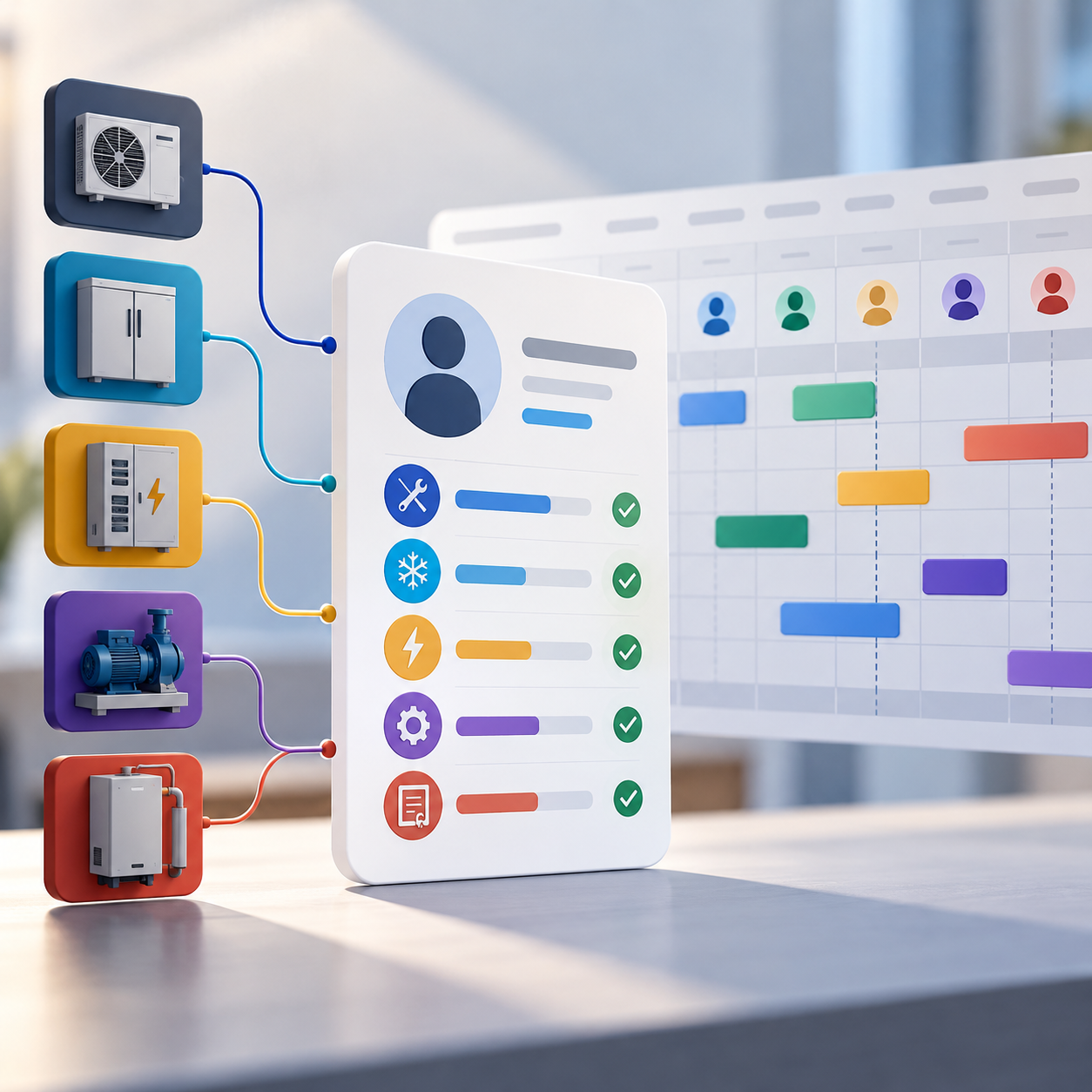
This is why technician profiles need more detail than job title and territory. Skills-based workforce planning takes this further by using workforce capabilities and evolving skill requirements alongside traditional role and headcount data.
Some skills also expire. A certification that was valid last year may no longer be current, while a technician who completed new product training last month may now be suitable for jobs the system still excludes them from.
Without regular updates, the workforce plan gradually stops reflecting the real team.
Better Skill Data Makes Scheduling More Accurate
Scheduling becomes stronger when the system understands the difference between being available and being suitable.
A technician may be only ten minutes from the customer, but that does not make them the best person for the job if they have limited experience with the equipment. Another technician 25 minutes away may have repaired the same model dozens of times.
That trade-off matters because smart field service scheduling depends on good information behind the decision. Travel, appointment windows, urgency, and availability all matter, but skill fit needs to be considered alongside them.
The strongest technician is not always required either. Sending a senior specialist to every routine job can create another problem by using scarce skills where they are not needed.
Good skill data allows the schedule to distinguish between work that a general technician can handle and jobs that genuinely require deeper expertise.
This helps protect specialists for higher-risk work while giving less experienced technicians appropriate opportunities to build capability.
Skill matching also affects first-time fix rate. A technician may arrive quickly but still be unable to resolve the fault if the assignment does not match their product knowledge or certification.
A slightly longer initial travel time can be worthwhile when it prevents an entire second visit.
A Real Service Day Shows Why Skill Visibility Matters
Imagine a company maintaining commercial kitchen equipment across a large city. On Tuesday morning, a hotel reports that one of its combination ovens is shutting down during peak breakfast service.
The customer needs confirmation that the request has been logged, an appointment window, and advice on whether the oven can continue to be used safely.
Three technicians appear available. The nearest is a strong general appliance engineer but has never worked on that oven series.
The second technician has completed manufacturer training but is already committed to a complex repair across the city. The third is slightly farther away but has repaired the same model several times and recently completed updated electrical-control training.
With only basic workforce data, dispatch may choose the closest technician. They arrive quickly, identify that the fault involves the control system, but cannot complete the diagnosis without specialist knowledge.
Another appointment is then needed.
With accurate skill data, the dispatcher sees that the third technician is the stronger match. The system also shows that the likely control components are already in that technician’s vehicle stock.
The customer receives a realistic arrival window rather than simply the fastest possible one. The technician reviews the previous service history before travelling and arrives prepared for the model.
The fault is traced to a failing control relay and resolved during the visit.
The important point is that the business did not necessarily need to increase headcount. It needed better visibility into the capabilities of the workforce it already had.
Skill data turned existing workforce capacity into usable service capacity.
Skill Data Also Reveals Training and Hiring Gaps
The value of skill data extends beyond daily dispatch. It can show service leaders where future workforce problems are developing.
Suppose a company maintains 3,000 assets across several equipment families. Demand analysis shows that installations of one newer product are increasing rapidly, but only four technicians are currently qualified to work on it.
That information creates an early warning. The company can train additional technicians before those four specialists become a scheduling bottleneck.
The same analysis can influence hiring. Instead of simply recruiting another general field technician, the business may discover that it needs someone with controls experience, refrigeration certification, or knowledge of a specific product family.
Skill data also helps with succession planning. If only one experienced engineer can service a critical legacy system and that person is approaching retirement, the risk should be visible long before their final working day.
Managers can then pair another technician with them, create targeted training, and make sure practical knowledge is transferred.
Parts planning can benefit too. If the business knows which technicians are likely to work on certain equipment, it can align vehicle stock and regional inventory with those skills.
That complements approaches such as predicting parts demand before service visits. Parts readiness and technician capability both influence whether work can be completed on the first visit.
Skill Records Need to Reflect Real Capability
A large skills database is not automatically useful. The information needs to be current, specific, and connected to actual service decisions.
Simply marking someone as “HVAC skilled” may be too broad. The technician may be excellent with split systems but have limited experience with industrial chillers.
Skill levels can therefore be useful. Teams might distinguish between trained, competent, advanced, and specialist capability rather than using a simple yes-or-no label.
Actual job outcomes can also provide useful evidence. Repeated successful outcomes on a particular type of work can provide useful evidence of technician experience, especially when considered alongside training, certifications, supervisor assessment, and other performance information.
Managers still need oversight. Performance data should not automatically assign skills without considering training, safety requirements, certification rules, and supervisor assessment.
Technicians should also be able to see and update their profiles. If someone completes new training or gains experience with a product, that progress should not remain hidden until an annual review.
Field service planning is increasingly about understanding capability, not just counting people.
When skill data is accurate, dispatchers make stronger assignments, managers can identify training needs earlier, and recruitment can target real gaps rather than general headcount.
Customers benefit as well. The person arriving is more likely to understand the equipment, bring the right preparation, and complete the work without another visit.
Accurate skill data turns workforce planning from a headcount exercise into a clearer view of operational capability, helping service organizations align technicians, training, recruitment, and future demand.