All articles

How to Evaluate Field Service Scheduling Software in 2026: A Buyer’s Checklist
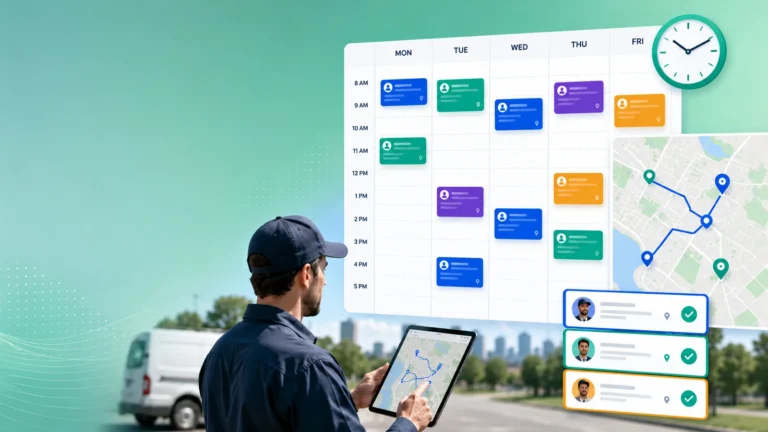
AI schedule optimization is moving into FSM platforms such as Dynamics 365 Field Service. Here is how service leaders should evaluate field service scheduling software in 2026, from constraints and rescheduling to AI controls and cost.

Chillventa 2026: Refrigerant Transition Makes Technician Qualifications a Scheduling Requirement
Back from Chillventa 2026, the Fieldcode team explains why natural and low-GWP refrigerants make technician qualifications a hard scheduling requirement.

IFS Unleashed 2026: What IFS Intelligence and the Industrial AI Harness Mean for Field Service
IFS launched IFS Intelligence and the Industrial AI Harness at IFS Unleashed 2026. Here is what was announced, what field service customers reported, and what it means for service leaders.

ServiceTitan Property Care Launches for Enterprise Pest Control, Lawn Care, and Pool & Spa Businesses
ServiceTitan has launched ServiceTitan for Property Care for enterprise pest control, lawn care, and pool and spa businesses, along with a native Sentricon® reporting workflow developed with Corteva Agriscience.
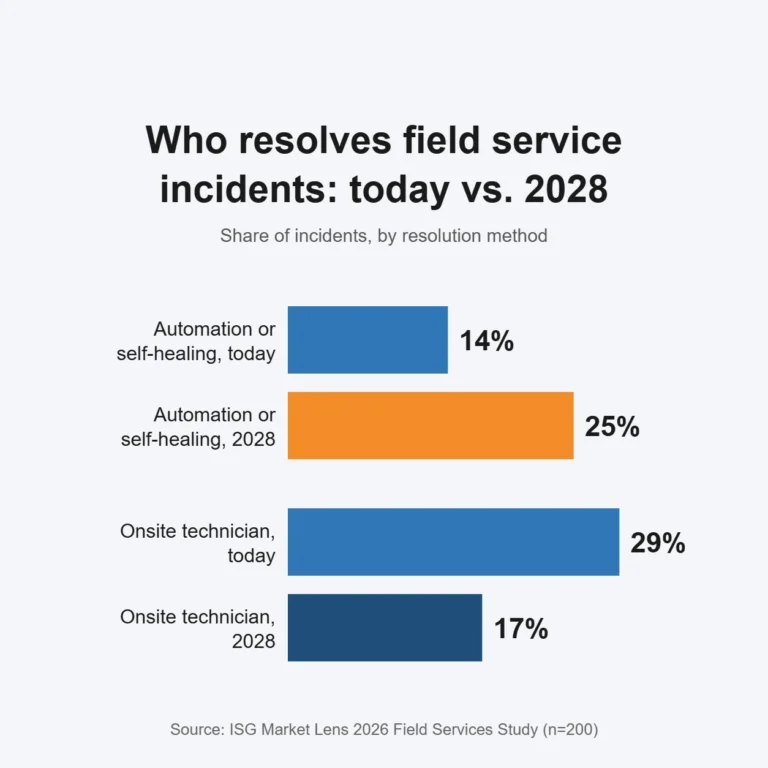
AI in Field Service Statistics 2026: What Four New Reports Reveal
The latest AI in field service statistics come from four studies published in 2026. Together they find that almost every service organization now uses AI in some form, and that leaders expect it to change how their teams resolve incidents by 2028. But the same studies also show a gap: deployment is moving faster than […]

Bregal Milestone takes majority stake in field service software provider Asolvi
Bregal Milestone has agreed a majority investment in Asolvi, buying out Volpi Capital and Viking Growth to back the FSM vendor’s AI roadmap and further acquisitions.
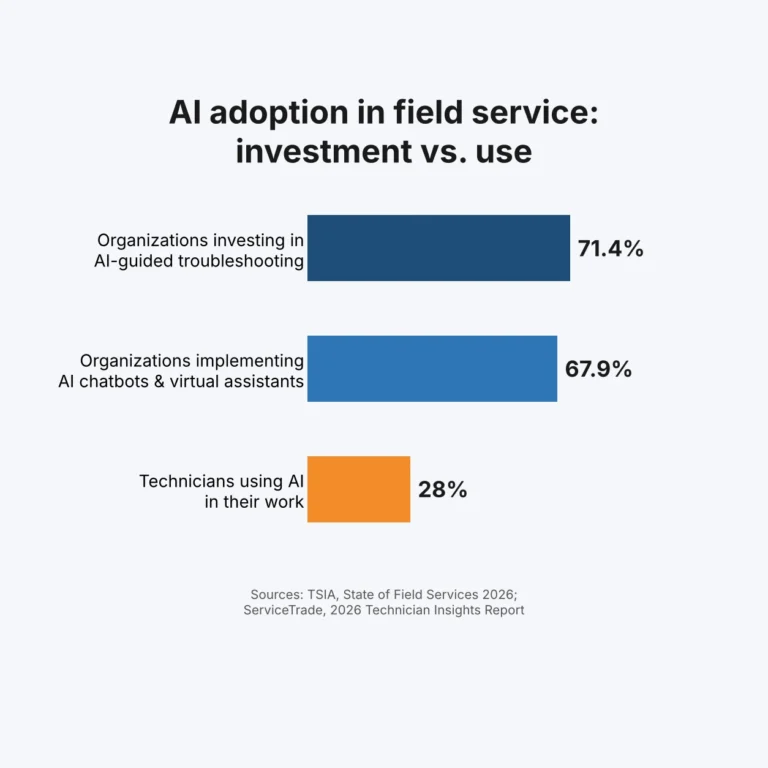
AI Adoption in Field Service: Closing the Technician Gap
AI adoption in field service lags investment: 71.4% of organizations invest in AI troubleshooting, yet only about 28% of technicians use AI. What 2026 research says and how to close the gap.

Fieldcode Brings Zero-Touch Field Service Workflows to Four European Trade Events
Fieldcode will demo its zero-touch field service approach at Field New Tech, Chillventa, Service Summit and HEATEXPO in autumn 2026.

Planon Launches Field Services Solution in North America
Planon has launched its Field Services Solution in North America, combining building management and field service operations, including subcontractors, in one platform.

MTTR in Field Service: 2026 Benchmarks, Formula and 6 Ways to Cut Repair Time
MTTR measures how long customers wait for a failed asset to work again. Here is the formula, what the benchmark data really says and six ways to reduce it.