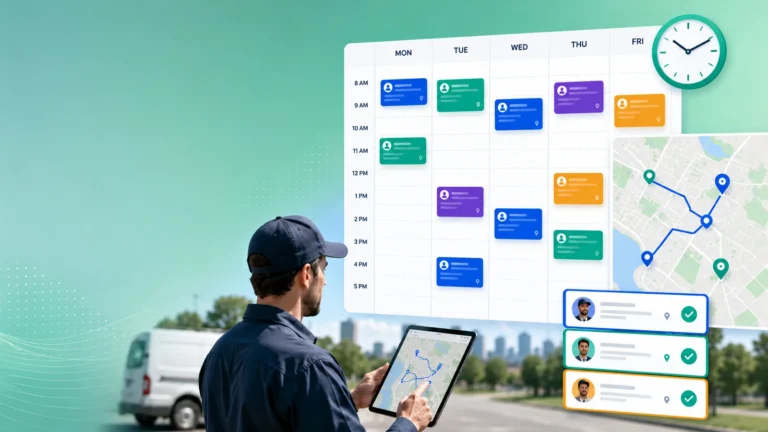
Field service teams can add external capacity without losing control by keeping job allocation, service standards, customer communication, and completion evidence inside one operating model. External technicians may perform the work, but the service company should still control who receives each job, what process they follow, and how the outcome is recorded.
This gives the business more coverage during demand spikes, skill shortages, and regional expansion without creating a separate customer experience. The goal is not simply to find extra people. It is to make external resources work as a controlled extension of the existing team.
Add Capacity for a Defined Operational Reason
External capacity works best when the business is clear about the gap it needs to fill. Some teams need temporary help during summer HVAC demand, while others need specialist skills, evening coverage, or technicians in territories where hiring a full local team is not practical.
That decision should come from demand, skills, and territory data rather than a last-minute reaction to a growing backlog. Good capacity planning for seasonal service demand shows where support will be needed, when pressure is likely to begin, and which job types will create it.
The service company can then decide which work is suitable for partners. Routine installations, planned inspections, and standard break-fix jobs may be easier to externalize than high-risk work involving sensitive assets or complex contracts.
A dispatcher still needs one view of internal and external availability. The best option should be chosen by skills, distance, SLA risk, cost, and likely completion time, not simply by employment type.
Use the Same Assignment Rules and Service Standards
Customers should not receive a lower standard because an external technician handles the visit. Appointment confirmation, arrival windows, safety steps, service checklists, and completion evidence should follow the same core rules.
Partners should be approved for specific skills, products, territories, certifications, and customer types rather than treated as interchangeable labor.
A dispatcher should be able to confirm that a partner technician is authorized for the asset, available within the required window, and equipped to complete the likely repair. Sending the first available person may clear the board quickly, but it can extend field service resolution times when the job needs reassignment or another visit.
The technician also needs the customer details, asset history, site instructions, required task steps, parts information, escalation route, and a clear definition of completion.
Fieldcode describes this approach through modern dispatching for mixed field service teams, where internal technicians and external resources can follow shared routing logic and workflows. What matters is whether everyone is working from the same service rules.
A Real Capacity Spike Shows What Control Looks Like
Imagine a telecom service company supporting business connectivity across three regions. A severe storm causes a sudden rise in equipment faults while the internal team is already committed to priority repairs.
One customer reports that a branch office has lost its primary connection and is operating on a limited backup line. The customer wants confirmation that the case is active, a technician arrival window, and a clear explanation of what happens if the fault cannot be fixed during the first visit.
Every suitable internal engineer is several hours away. An approved partner technician is nearby and holds the required network certification.
The dispatcher assigns the job through the same system used for internal staff. The partner receives the site contact, equipment details, fault history, access instructions, SLA deadline, diagnostic steps, and likely replacement components.
The customer receives the normal branded appointment update rather than a separate message from an unknown contractor. During the visit, the technician records test results, replaces a damaged power unit, uploads photos, and confirms that the connection is stable.
The dispatcher follows each status change and reviews the evidence before closure. Finance receives the partner cost, the customer record is updated, and the asset history remains available for future visits.
Control is preserved because the company still owns the workflow and customer promise. The external technician adds capacity without creating an information gap.
Keep Visibility, Communication, and Escalation in One Place
External service becomes difficult when updates move through calls, emails, spreadsheets, and messaging groups. A dispatcher may know that a partner accepted the job but have no clear view of whether the technician is travelling, waiting for access, or unable to complete the repair.
Internal and external technicians should use the same practical status stages, such as accepted, en route, on site, awaiting parts, escalated, and completed.
Customer communication should remain under the service company’s control. The customer needs a confirmed appointment, a realistic arrival window, notice of delays, and the next step after the visit.
They should not have to work out which company to contact because the person arriving wears a different uniform. Clear communication protects the main service relationship even when delivery involves several organizations.
A partner technician must also know who to contact when the asset differs from the ticket, a safety risk appears, a required part is missing, or the repair falls outside the approved scope.
Keeping these actions in one workflow helps reduce manual coordination. Dispatchers spend less time chasing updates, while supervisors focus on genuine exceptions.
Measure External Capacity as Part of the Full Network
External resources should be measured with the same discipline as internal teams, although the comparison must be fair. Partners may receive different job types, territories, or service windows, so a simple ranking can be misleading.
Useful measures include acceptance time, arrival-window performance, completion rate, first-time fix rate, repeat visits, documentation quality, customer feedback, escalation frequency, and SLA compliance. Cost per completed job should include extra coordination and repeat travel, not only the partner’s invoice.
Leaders should review where external capacity is creating value. It may protect service levels during predictable peaks, improve specialist coverage, or support multi-region service teams without requiring a full local workforce in every market.
They should also identify where control is weakening. Repeated missing photos may point to an unclear workflow, while frequent reassignment may mean partner skills are not recorded accurately.
External capacity should not become a permanent fix for poor planning. If the same territory needs emergency partner support every week, the business may have a deeper staffing, training, or scheduling problem.
Used well, external resources give field service teams flexibility without creating a second operating system. Clear eligibility rules, shared workflows, consistent communication, visible statuses, structured escalation, and outcome-based reviews keep the operation under control.
That is the difference between adding labor and adding dependable capacity. One gives the schedule more names. The other helps the organization handle more work while protecting the service customers already expect.