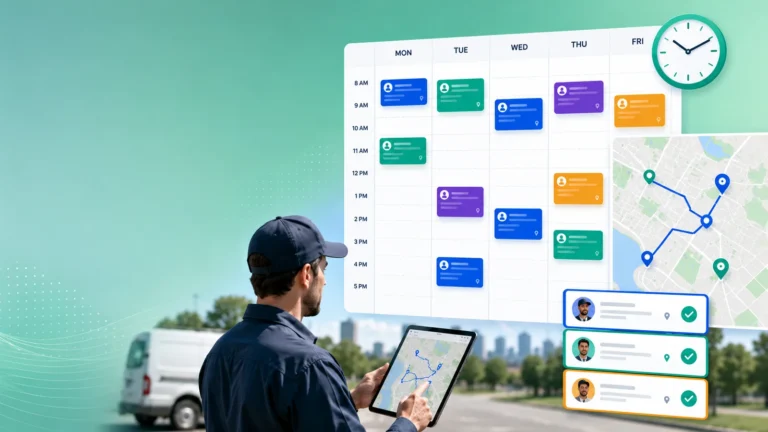
QKS Group has released its SPARK Matrix™: Field Service Management, Q3 2026, dated November 6, 2026. The report evaluates 15 field service management (FSM) vendors on QKS Group’s two-axis SPARK Matrix framework. However, the full report is a paid publication, so vendor positions and scores are not public. Still, the public summary shows which vendors QKS Group assessed, how QKS Group defines the FSM category and which method sits behind the rankings.
Key takeaways
- The Q3 2026 SPARK Matrix for Field Service Management covers 15 vendors with global impact, according to QKS Group.
- QKS Group scores vendors on two dimensions: Technology Excellence and Customer Impact.
- QKS Group’s FSM definition spans the full service cycle, from planning and scheduling to execution, analytics and customer self-service.
- Because positions in the matrix are only available in the paid report, buyers should treat the vendor list as a starting point for their own evaluation.
Which vendors are in the Q3 2026 SPARK Matrix for FSM?
According to the report page, the SPARK Matrix includes analysis of vendors such as Fieldcode, IFS, KloudGin, Microsoft, Nomadia, Nuvolo, Oracle, OverIT, Praxedo, PTC, Salesforce, SAP, ServiceNow, ServicePower and Syncron.
The list mixes large enterprise application vendors such as Microsoft, Oracle, Salesforce, SAP and ServiceNow with companies whose portfolios center on service, asset and field operations. For buyers, therefore, that range reflects a real choice: extending an existing enterprise platform with field service capabilities, or selecting a platform built around field service as its core use case. Our overview of the best field service management software in 2026 compares several of these platforms in more detail.
How QKS Group defines field service management
In the report summary, QKS Group analyst Nithin A K describes FSM as software that helps organizations manage “the planning, scheduling, dispatch, execution, and optimization of field service operations.”
In addition, he lists the capabilities that modern FSM platforms combine: AI-driven scheduling and dispatch, mobile workforce enablement, asset and work order management, predictive maintenance, customer self-service and real-time analytics. The stated goals are higher technician productivity, better first-time fix rates, customer satisfaction and service profitability. He also names AI, IoT, AR and automation as the technologies moving field service toward proactive, connected and outcome-driven delivery.
The definition is broad. As a result, a vendor can be strong in some of these areas and lighter in others, which is one reason a single position in a matrix does not tell a buyer which platform fits their operation.
How the SPARK Matrix evaluates vendors
QKS Group explains its SPARK Matrix framework on its website. The framework ranks vendors on two dimensions:
- Technology Excellence
- Customer Impact
Based on these scores, vendors then fall into tiers: Leaders and Emerging Leaders, Contenders and Strong Contenders, and Aspirants. QKS Group says its analysis draws on vendor briefings, customer references, market intelligence and its own scoring frameworks. However, the public page does not explain how QKS Group weights individual criteria.
How service leaders can use an analyst vendor matrix
An analyst matrix is useful for building a long list and for checking whether analysts recognize a vendor in the category. However, it cannot reflect your job mix, contract structures, partner network or existing systems. These steps help turn a report like this into a practical shortlist:
- Start from your own requirements. First, write down the scheduling, dispatch, mobile and integration needs that matter most before comparing vendors.
- Use the vendor list as a long list. Fifteen vendors is a manageable starting point. Next, narrow it to three or four based on your industry, region and scale.
- Ask about the evaluation. Ask shortlisted vendors whether they can share the report or walk you through how QKS Group assessed them.
- Test scheduling with your own data. Run a pilot with real jobs, skills and service windows. Our field service scheduling software buyer’s checklist covers what to test.
- Compare total cost early. Licensing, implementation and integration costs vary widely. For more detail, see our guide to field service software pricing.
- Check AI claims against evidence. Finally, ask how AI features perform in production and how dispatchers can review or override them. Our roundup of AI in field service statistics gives context on adoption.
Frequently Asked Questions
What is the QKS SPARK Matrix for Field Service Management?
It is a vendor evaluation report from QKS Group that ranks field service management vendors on Technology Excellence and Customer Impact. The Q3 2026 edition is dated November 6, 2026.
Which vendors are included in the Q3 2026 edition?
Fieldcode, IFS, KloudGin, Microsoft, Nomadia, Nuvolo, Oracle, OverIT, Praxedo, PTC, Salesforce, SAP, ServiceNow, ServicePower and Syncron, according to QKS Group’s report page.
Where can I see the vendor positions?
Positions and detailed vendor profiles are part of the paid report available from QKS Group. You can also ask shortlisted vendors whether they are able to share it.
What categories does the SPARK Matrix use?
Based on the two dimensions, QKS Group groups vendors into Leaders and Emerging Leaders, Contenders and Strong Contenders, and Aspirants.
Should a vendor matrix decide which FSM software to buy?
Buyers get the most from it as one input among several. For example, a pilot with your own jobs, technicians and integrations shows how a platform performs in your operation.
Conclusion
The Q3 2026 SPARK Matrix for Field Service Management gives buyers a list of 15 assessed vendors, including Fieldcode, and a clear definition of what QKS Group expects from a modern FSM platform. As a next step, service leaders who are reviewing their FSM software can use the list to build a long list, then shortlist three or four vendors and test them with their own scheduling scenarios.