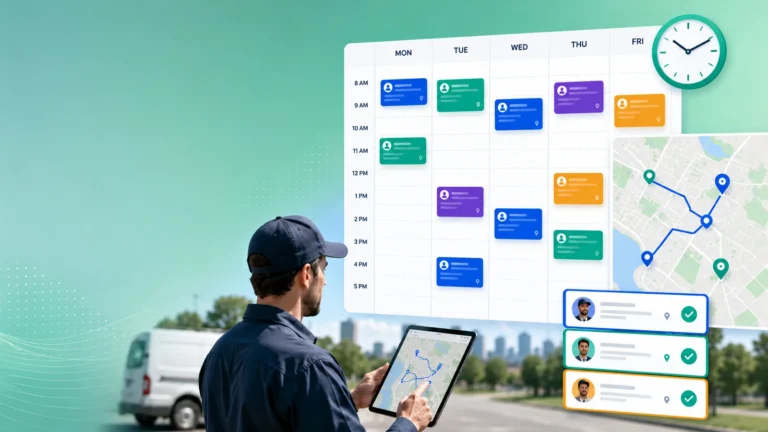
AI can detect service jobs that are likely to escalate by identifying warning signs before they develop into customer complaints, SLA breaches, or repeat visits. These signals include recurring equipment failures, missed appointments, technician delays, missing parts, repeated customer contacts, and jobs that take longer than expected.
By combining historical service records with current operational data, AI can help dispatchers identify jobs that need attention before problems become more difficult to resolve.
Key takeaways
- AI can identify escalation risk by analyzing service history, job progress, SLA deadlines, and customer communication.
- Combining multiple warning signs provides more useful context than monitoring individual problems.
- Risk alerts should explain why a job needs attention and help dispatchers decide what to do next.
- Early intervention can help prevent repeat visits, missed commitments, and avoidable customer complaints.
How AI identifies early signs of service escalation
Most service escalations develop through several smaller problems rather than a single event.
A customer may have already experienced two unsuccessful repair visits. The next technician is running late, the required replacement part has not been confirmed, and the SLA deadline is approaching.
Each issue may be manageable individually. Together, they indicate that the job needs closer attention.
AI-based escalation detection can analyze historical service records and current operational data to identify similar combinations. Depending on the system, this may involve machine learning, natural language processing (NLP), rules-based alerts, or a combination of these approaches.
Three types of warning signs are particularly relevant.
Repeat failures and service history
An asset that fails repeatedly within a short period may require a different response from a routine repair.
AI can analyze previous work orders, asset history, technician notes, and repair outcomes to identify recurring problems. A third visit for the same fault, for example, may justify assigning a specialist or preparing additional diagnostic equipment.
Reliable job data is essential because incomplete service history and inconsistent completion notes make meaningful patterns harder to identify.
IBM’s guide to predictive maintenance explains how historical maintenance records and operational data can be analyzed to identify patterns associated with equipment failures. This is relevant to the asset-related warning signs that may contribute to service escalation, although predicting an equipment failure is different from predicting a customer escalation.
Technician delays and unusual job duration
A repair that normally takes 60 minutes but remains open after three hours may indicate an unexpected technical problem, missing equipment, or an inaccurate initial diagnosis.
AI can compare actual job progress with historical durations for similar work and flag unusual deviations.
However, longer duration does not automatically mean that a job is going wrong. Repair complexity, asset condition, and site access can all affect how long a visit takes.
SLA pressure and appointment disruption
A technician delayed at an earlier appointment may no longer be able to reach the next customer within the agreed service window.
Combining SLA deadlines with live job status, technician availability, and estimated travel time can help identify commitments that may be at risk.
This is particularly relevant to IT services and telecommunications, where delayed onsite work can affect network availability, business operations, and contractual service commitments.
Customer communication can reveal escalation risk
Escalation risk is not limited to technical and scheduling problems. Customer communication can provide important context about the service experience.
A customer who requests an ETA once may simply need an update. A customer who has contacted support four times, mentions previous failed visits, and asks to speak with a manager may need more immediate attention.
Natural language processing can help identify these differences by analyzing ticket notes, customer messages, call summaries, and other available communication records.
For example, phrases such as “this is the third time” or “we cannot keep the equipment offline” may indicate a recurring or business-critical problem.
The purpose is not to classify customers as difficult. It is to identify situations where unresolved problems and communication gaps are increasing the risk of escalation.
Good service intake also improves the information available for later decisions. When voice AI captures service requests, the initial record can include urgency, operational impact, access requirements, and customer expectations.
This provides more useful context than a ticket containing only a short problem description and an urgent priority label.
A practical example of AI escalation detection
Consider a company that maintains automatic loading doors at warehouses.
A customer reports that a loading bay door has stopped closing correctly. The first technician adjusts the mechanism on Monday and records the job as completed.
The fault returns on Wednesday, and a second visit is scheduled for Thursday afternoon.
By Thursday morning, the AI system identifies several warning signs: a repeat failure, recent repair history, multiple customer contacts, and a loading bay that is essential to outbound deliveries.
The assigned technician is also delayed at another appointment, putting the warehouse visit at risk of starting late.
Instead of treating the job as a routine repair, the system flags it for dispatcher review.
The dispatcher identifies a more experienced door specialist working nearby who has the necessary diagnostic equipment and a suitable replacement control unit.
The job is reassigned, and the customer receives an updated appointment confirmation before the original service window begins.
When the specialist arrives, they identify an intermittent control-board fault and replace the board during the same visit.
AI did not diagnose the door remotely or guarantee a successful repair. It recognized that the job had stopped behaving like a routine service request.
That early warning gave the dispatcher time to arrange a more appropriate response before another unsuccessful visit occurred.
How escalation risk should change the workflow
Identifying escalation risk is useful only when the warning leads to an appropriate response.
A moderately elevated risk may prompt a dispatcher to check job progress, confirm parts availability, or contact the customer.
A high-risk job may require supervisor review, a specialist technician, protected schedule time, or direct customer communication.
However, an alert should explain why the job needs attention.
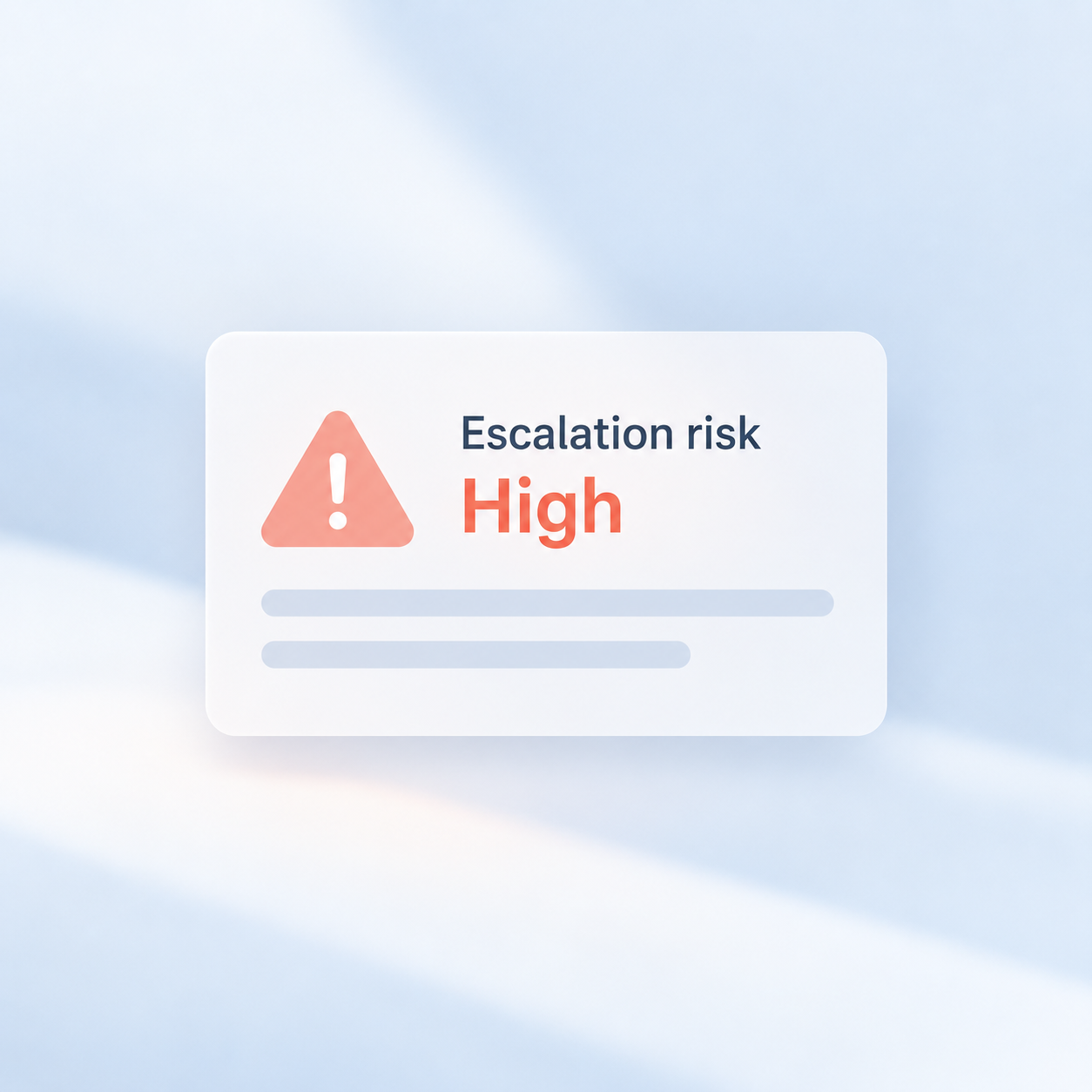
A notification that simply says “High escalation risk” provides little actionable information. A more useful alert might explain that the ticket has two previous failed visits, the SLA expires in four hours, and the assigned technician is likely to arrive late.
The dispatcher can then decide which intervention is appropriate.
An escalation risk score should also be distinguished from an AI confidence score. Escalation risk estimates the likelihood of a job requiring additional intervention, while an AI confidence score indicates the model’s confidence in its prediction. Confidence scores do not necessarily reflect actual prediction accuracy, so they should be interpreted according to how the model is designed and validated.
This distinction matters when using AI confidence scores in service triage. When the model indicates uncertainty, the system should make that uncertainty visible so dispatchers can review the available evidence and decide whether further information is needed.
Human review remains important, especially when reassignment could disrupt other customers or create additional operational costs.
How to measure whether AI escalation detection works
The number of tickets flagged by AI is not enough to determine whether escalation detection improves service operations.
Service teams should examine whether flagged jobs were completed successfully, whether customers needed to call again, and whether early interventions helped prevent SLA breaches or repeat visits.
False alarms matter too. If dispatchers receive too many warnings that require no action, important alerts may become harder to recognize.
Teams should evaluate which combinations of signals reliably identify escalation risk in their operation and use those findings to refine the system’s rules or predictive models.
The relevant patterns may differ by customer, asset, territory, and contract. A 30-minute delay on a routine residential appointment has different consequences from the same delay during a production-line breakdown.
Conclusion
AI escalation detection helps field service teams recognize jobs that are becoming difficult while there is still time to intervene.
By combining service history, customer communication, technician progress, and SLA information, AI can bring potential problems to a dispatcher’s attention before they develop into larger service failures.
The value comes from what happens next: assigning the right technician, confirming parts, adjusting the schedule, or communicating with the customer before another commitment is missed.