


How AI Predicts Parts Demand Before Service Visits
AI predicts parts demand before service visits by comparing a new job with patterns from past repairs, asset histories, fault codes, technician usage, seasonal demand, and current inventory. It cannot guarantee which component will be needed, but it can identify the most likely parts and help the team prepare before the technician leaves. That changes […]

AI in Field Service: Real Applications from Major FSM Software Providers
A lot of content about AI in field service remains too generic. It talks about “optimization” and “intelligence” without showing what vendors are actually doing inside the workflow. The clearer way to look at the market is by use case. Today, the most concrete AI applications from major FSM vendors show up in five places: […]

Why Automation Matters in Field Service Workflows
Field service gets more complicated long before most teams admit it. At first, the workflow may still feel manageable. Jobs come in, coordinators assign work, technicians move through the day, and customers get updates when needed. But as volume grows, the weak points start showing. More manual follow-up is needed. More schedule adjustments happen during […]

How Voice AI Is Improving Service Intake
Service intake has always been one of the most overlooked pressure points in field service. Everyone notices dispatch when the board gets messy. Everyone notices technicians when jobs run late. But the intake stage often gets less attention, even though it shapes everything that happens after it. A weak intake process creates vague tickets, missing […]
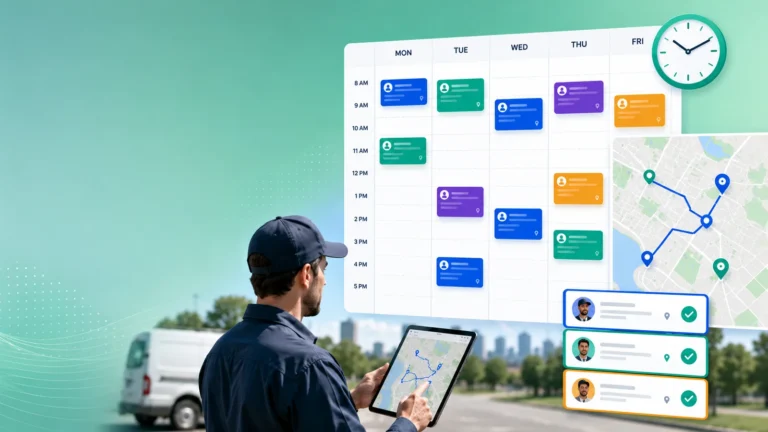
What Makes Smart Scheduling Work in Field Service
A schedule can look full and still be poorly built. That is one of the biggest misunderstandings in field service. When people talk about scheduling, they often focus on volume. How many jobs were assigned. How many technicians were booked. How many appointments fit into the day. But smart scheduling is not just about fitting […]

How AI Is Changing Field Service Dispatch
Dispatch has always been one of the most demanding parts of field service. On a calm day, it already requires constant judgment. On a busy day, it becomes even harder. New jobs come in, customer availability changes, technicians run late, urgent work pushes planned work aside, and the entire board can start shifting by the […]

How Fieldcode Voice AI Reduces Manual Dispatching in Field Service
Manual dispatching has not disappeared from field service. But the pressure on it is getting harder to ignore. Service teams are dealing with higher call volumes, tighter response expectations, more scheduling changes, and more customer demand for faster updates. At the same time, dispatchers are still expected to gather job details, classify urgency, update tickets, […]

How AI Optimizes Field Service Scheduling and Reduces Dispatch Costs
Field service scheduling looks simple from a distance. A job comes in. A technician gets assigned. The route gets built. The customer gets a time window. The work gets done. In reality, the process is much messier than that. Customer availability changes. Travel times shift. Jobs run longer than expected. Emergency work pushes planned work […]

What Makes Field Service AI Worth the Investment
A lot of companies say they want AI in field service. Far fewer can clearly explain why. That is the real issue. The value of field service AI is not that it sounds modern. It is that it helps service teams make better decisions faster, with less manual effort and less operational waste. When it […]

Which FSM Workflows Should You Automate First
The biggest mistake in field service automation is trying to automate everything at once. That usually sounds ambitious, but it creates the wrong kind of progress. Teams end up layering software over messy habits, then wonder why the workflow still feels heavy. The better move is to start with the FSM workflows that create the […]