


Why Offline-First FSM Still Matters in 2026
Offline-first FSM still matters in 2026 because field service work often happens in places where mobile connectivity is weak, unstable, restricted, or completely unavailable. A technician should still be able to open the work order, review asset history, follow the required steps, and record the outcome without waiting for a signal. Cloud platforms, AI tools, […]

Solvares Field Service joins G-Cloud 15 with VISITOUR
Solvares Field Service UK has secured a place on the UK Government’s G-Cloud 15 framework, creating a procurement route for public sector organisations looking to access its VISITOUR scheduling and route optimisation software. The appointment covers VISITOUR, which Solvares positions for organisations managing mobile workforces, appointments and field service capacity. Key takeaways What the G-Cloud […]
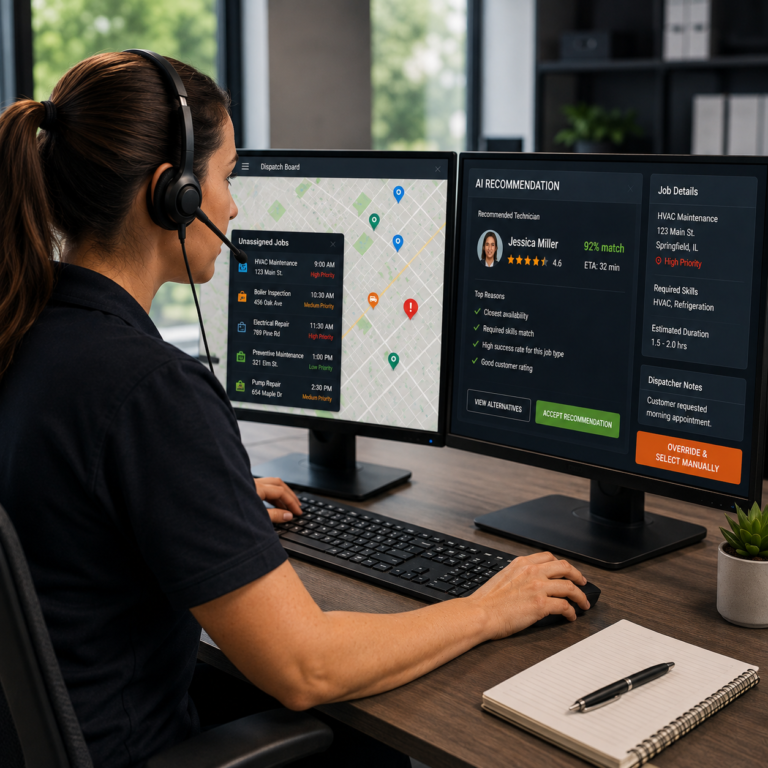
When Should Dispatchers Override AI Recommendations?
Dispatchers should override AI recommendations when the system is working with incomplete information, missing important customer context, creating a safety or compliance risk, or improving one assignment at the expense of the wider service day. An override is also justified when a dispatcher has reliable, current information that the AI cannot yet see. The aim […]

How AI Agents Are Changing the Dispatcher Role
AI agents are changing the dispatcher role by handling routine coordination while leaving complex service decisions with people. They can collect job details, suggest assignments, monitor schedule changes, send updates, and flag exceptions that need attention. This does not make the dispatcher unnecessary. It shifts the role away from constant administration and toward judgment, customer […]

How Field Service Teams Add External Capacity Without Losing Service Control
Field service teams can add external capacity without losing control by keeping job allocation, service standards, customer communication, and completion evidence inside one operating model. External technicians may perform the work, but the service company should still control who receives each job, what process they follow, and how the outcome is recorded. This gives the […]
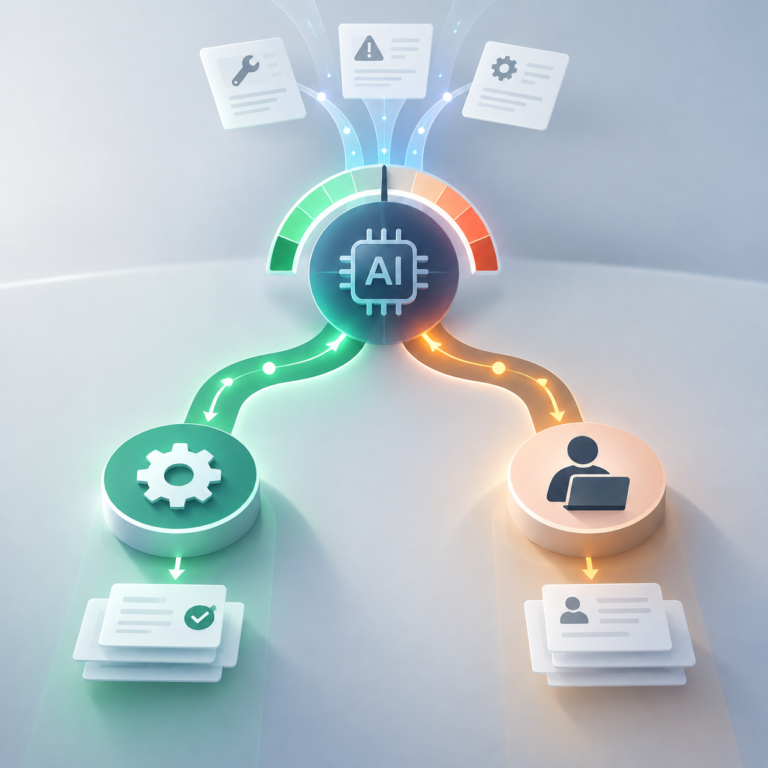
How AI Confidence Scores Improve Service Triage
AI confidence scores can improve service triage by indicating how strongly an AI system supports a recommendation. However, the score should not automatically be treated as the probability that the recommendation is correct; that interpretation depends on how the model produces, calibrates, and validates its confidence scores. Instead of simply labelling a job as urgent, […]

How Carbon-Aware Scheduling Cuts Service Emissions
Carbon-aware scheduling cuts service emissions by reducing unnecessary journeys, assigning nearby technicians, grouping jobs geographically, and avoiding visits that are unlikely to resolve the problem. It adds environmental impact to the factors already used when planning field work. A normal schedule may focus on skills, availability, urgency, service-level agreements, and appointment windows. A carbon-aware schedule […]

Digital Proof of Service Is Moving Beyond the Customer Signature
Digital proof of service is moving beyond the customer signature because a signature only confirms that someone was present to sign. It does not show what the technician found, what work was completed, whether the asset was tested, or what happens next. A stronger service record may include arrival and completion times, asset identification, before-and-after […]

How AI Predicts Parts Demand Before Service Visits
AI predicts parts demand before service visits by comparing a new job with patterns from past repairs, asset histories, fault codes, technician usage, seasonal demand, and current inventory. It cannot guarantee which component will be needed, but it can identify the most likely parts and help the team prepare before the technician leaves. That changes […]
Fieldcode named a Representative Vendor in the 2026 Gartner® Market Guide for Field Service Management
Nuremberg, Germany, [Aug 4, 2026] — Fieldcode, a provider of AI field service management software with Zero-Touch automation, today announced that it has been named a Representative Vendor in the 2026 Gartner® Market Guide for Field Service Management. Fieldcode develops software for service organizations that need to coordinate high volumes of installation, maintenance and repair […]