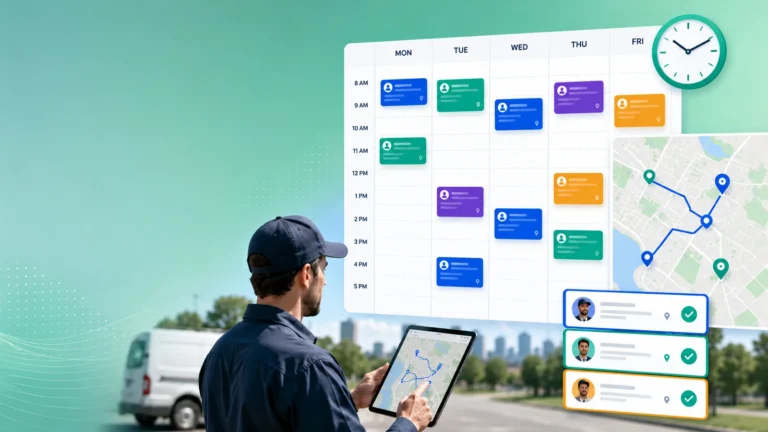
Klervo has introduced a simplicity-first approach to field service management, positioning its platform around usability for home service businesses that want to manage daily operations without adding unnecessary software complexity.
The announcement was released on June 8, 2026, through Pulse Media PR. Klervo describes its platform as an all-in-one field service management system for home service professionals, covering scheduling, dispatching, invoicing, customer management, and operational oversight.
Key takeaways
- Klervo is targeting home service contractors with field service management software designed around simplicity and usability.
- The platform brings scheduling, dispatching, invoicing, customer management, and business oversight into one system.
- The company says its goal is to reduce reliance on disconnected tools.
- Klervo’s positioning reflects a broader FSM trend: service businesses want useful automation without long learning curves.
- The announcement focuses on ease of adoption rather than advanced enterprise complexity.
What Klervo announced
Klervo is presenting its field service management platform as an alternative for contractors that may find traditional software too complex for daily use. According to the announcement, the platform is designed to help office teams coordinate schedules, give technicians access to job information, and provide owners with visibility into performance and revenue.
The company’s message is centered on practical operational needs: booking work, assigning technicians, tracking customers, issuing invoices, and monitoring business activity from one system.
Rather than asking contractors to reshape their work around complex software workflows, Klervo says its platform is built to support the way home service businesses already operate.
Why this matters for field service
Software adoption remains a common challenge in field service operations. Even when a platform offers many features, teams may struggle if dispatchers, office staff, technicians, or owners find the system difficult to use.
For smaller home service businesses, this issue can be more visible. A contractor may not have a dedicated operations analyst or software administrator. The same person may be managing calls, schedules, invoices, technician updates, and customer follow-up.
That makes usability more than a design preference. It affects how quickly teams can move from manual coordination to structured field service workflows.
A simplicity-first FSM approach can be relevant when teams need to:
- replace spreadsheets or disconnected tools
- reduce manual scheduling and dispatch coordination
- give technicians clearer job information
- centralize customer and invoice data
- improve visibility without overloading users
FSM News perspective
Klervo’s announcement fits a wider shift in field service technology. Vendors are no longer competing only on feature volume. Many buyers, especially smaller contractors and home service companies, are also evaluating how quickly teams can understand and use the system.
For FSM buyers, the key question is not only whether a platform includes scheduling, dispatching, invoicing, and customer management. The practical question is whether those functions reduce daily admin work without creating new internal process friction.
Klervo’s positioning addresses that concern directly by emphasizing a streamlined platform for everyday field service operations.
FAQs
What type of businesses is Klervo targeting?
Klervo is targeting home service professionals and contractors that need field service management software for daily operations such as scheduling, dispatching, invoicing, and customer management.
What does Klervo’s platform include?
According to the announcement, Klervo brings together scheduling, dispatching, invoicing, customer management, and operational oversight in one field service management platform.
Why is simplicity important in field service management software?
Simplicity matters because field service teams often need fast adoption across office staff, technicians, and managers. A system that is difficult to use can slow scheduling, reduce data quality, and limit the value of automation.
Resources