Same-day scheduling sounds simple on paper.
A customer calls. A job comes in. A technician gets assigned. The work gets done before the day ends.
But field service leaders know that reality is messier. Jobs arrive with missing information. Travel times shift. Technicians finish early or late. Customers ask for tighter windows. Urgent work pushes planned work aside.
That is why same-day scheduling is not really a calendar problem. It is an operating model problem.
The teams that do it well are not just faster. They are more structured. They know which jobs deserve immediate action, which jobs can wait, and which jobs should never enter the same-day queue in the first place.
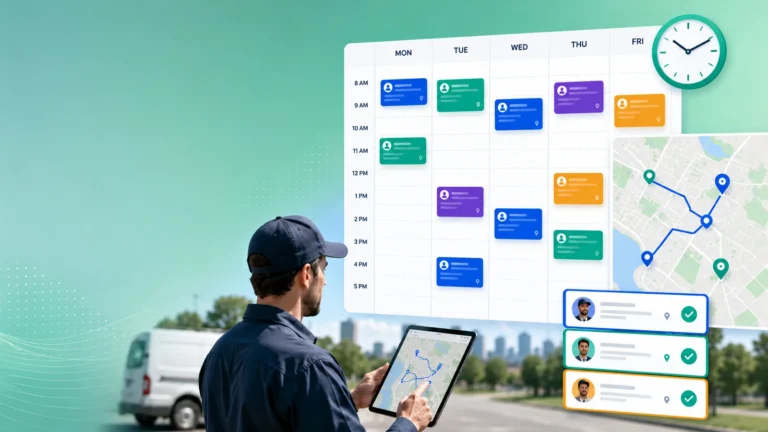
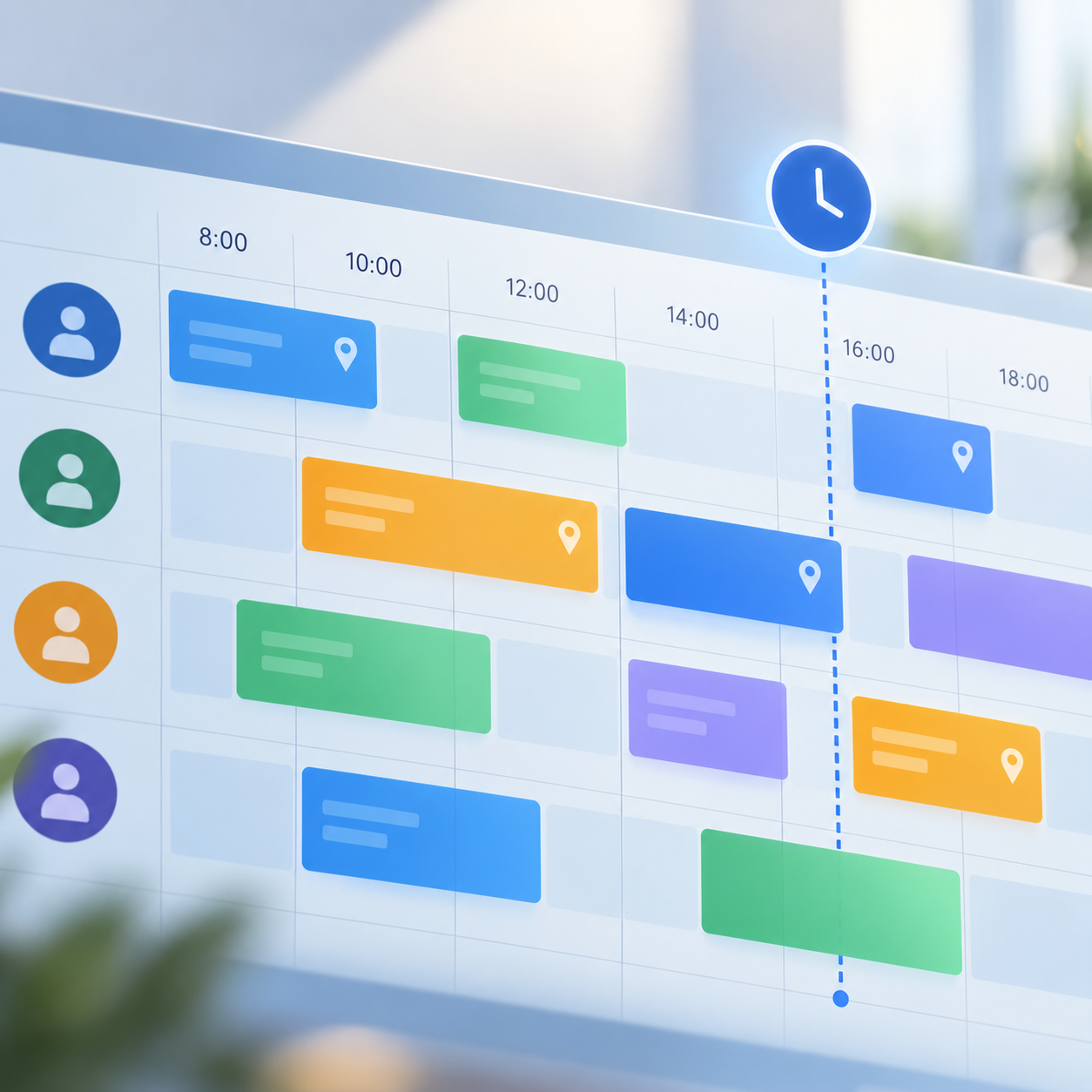
Same-day scheduling is not simply about booking a job for later that day. It is about adding controlled flexibility to an already optimized plan when actual field execution differs from what was expected. Jobs may finish early, priorities may change, or urgent interventions may create new demands during the day. Fieldcode is relevant in this context because its scheduling and dispatch logic can account for factors such as technician skills, location, availability, service priorities, and routing constraints. The objective is to adapt the plan as conditions change without losing the stability that existing customer commitments still require.
Same-day scheduling is a promise, not just a process
Customers do not think in dispatch terms.
They think in promises. If they hear “today,” they expect confidence, visibility, and follow-through. They do not care whether the issue came through a portal, a call center, or an internal escalation.
That is why same-day scheduling affects more than response time. It shapes trust.
A missed same-day commitment does more damage than a slower but realistic appointment. It creates internal pressure, frustrates the customer, and often forces dispatchers into manual reshuffling that hurts the rest of the day.
Field service leaders need to start there. The goal is not to make every job same-day. The goal is to make same-day commitments only when the operation can support them.
How Fieldcode supports same-day scheduling
Fieldcode approaches same-day scheduling as an extension of structured scheduling rather than a replacement for it. The original plan provides the foundation by accounting for workloads, technician skills, locations, SLAs, and existing appointments. As technicians begin executing that plan, however, actual progress can reveal capacity or constraints that were not visible earlier.
If work finishes sooner than expected, an urgent job enters the queue, or priorities change, automated scheduling and dispatching can help reassess where work can realistically fit. Assignment decisions can consider technician suitability and location, while route optimization can account for factors such as job urgency, distance, SLA deadlines, and parts requirements.
This matters because effective same-day scheduling is not about filling every newly available gap. It is about deciding when the schedule can absorb additional or higher-priority work without creating unnecessary disruption elsewhere.
The real blockers usually appear before dispatch
Many teams assume the issue starts when dispatch is slow.
In truth, the breakdown often starts earlier. The ticket may lack asset details. The priority may be unclear. The site may not be ready. The required part may still be in transit. The skill requirement may be guessed instead of confirmed.
When that happens, dispatch gets blamed for a decision made on weak inputs.
This is why field service scheduling needs stronger front-end discipline. Better intake rules, clearer triage, and stronger job qualification do more for same-day performance than adding more manual effort in the control tower.
That idea also connects naturally with how self-service portals reduce call volume. When customers can enter cleaner details at the start, the service team has a better chance of placing the right work into the right queue.
Not every urgent job belongs in the same-day lane
A healthy same-day model depends on classification.
Some jobs are true operational emergencies. Some are high-visibility customer issues. Some are revenue-protection cases. Others only feel urgent because expectations were set badly upstream.
If everything becomes same-day, nothing is managed properly.
Service leaders need a practical filter. Ask whether the issue is safety-critical, contract-critical, revenue-critical, or relationship-critical. If the answer is no, the job may still be important, but it may not belong in the same-day lane.
This is where same-day scheduling becomes a leadership decision, not just a dispatcher task. Priority rules need to be defined before the rush begins.
Same-day success depends on the quality of matching
Once a job is approved for same-day action, the next challenge is assignment.
The wrong match kills the benefit of speed. A fast dispatch to the wrong person still creates delays, callbacks, and repeat visits.
That is why skills, geography, parts readiness, and current workload all need to matter together. The best same-day systems do not simply fill the next empty slot. They make the best available decision under real operating constraints.
Fieldcode’s scheduling and dispatch positioning is built around this kind of automated matching, using job location, engineer skills, and availability to support assignment decisions. For same-day service, that is useful because the margin for error is smaller than it is in a standard next-day workflow.
This is also why skills-based routing matters so much. Same-day work only creates value when the first assignment has a strong chance of being the right one.
Manual dispatch breaks first when volume spikes
Most teams can survive manual dispatch on a calm day.
The real test comes when volume spikes at 10:30 a.m., two technicians are delayed, one customer changes availability, and a high-priority request lands with a contractual clock attached.
That is where dispatchers get trapped in reactive work. They start moving jobs by instinct, not by system logic. The schedule may still look full, but decision quality drops fast.
This is why dispatch automation matters. Not because people are the problem, but because humans should not spend the day recalculating what software can evaluate in seconds.
For field service leaders, the question is not whether dispatchers should disappear. It is whether dispatchers should spend their best time on exceptions, escalations, and service judgment instead of endless reshuffling.
Visibility makes same-day scheduling believable
Customers rarely expect perfection.
What they do expect is visibility. They want to know whether the appointment is still on track, whether the technician is delayed, and whether they need to stay on site for another three hours.
That is why same-day scheduling works best when communication is built into the workflow.
Real-time updates reduce inbound calls. Clear windows reduce friction. Better arrival confidence improves the service experience even when the day gets messy.
This is one reason customer-facing status tools matter. Fieldcode’s broader messaging around Zero-Touch service includes workflow automation that reduces back-and-forth scheduling effort and helps service organizations move faster with less manual coordination.
For a service leader, the lesson is simple. Same-day is not just about getting there. It is about keeping the customer informed while the operation adapts in real time.
Parts and same-day performance are tightly linked
Some same-day failures are caused by parts availability rather than dispatch itself.
The job gets assigned quickly, but the technician arrives without what is needed. Or the planner assumes local stock exists when it does not. Or the part is available, but not in the right vehicle or branch.
That is why service response times should never be reviewed without parts context.
If your operation promises same-day resolution, then inventory logic has to support that promise. Otherwise, you are only optimizing arrival, not outcome.
That is exactly why parts availability deserves a seat in the scheduling discussion. Same-day service looks good only when the visit can realistically move the job forward.
Technician routing is where small gains become big wins
In same-day service, minutes matter.
A route that looks acceptable in a weekly planning view can look wasteful when urgent work enters the queue midday. The more scattered the schedule, the harder it becomes to create room for true same-day jobs.
This is where technician routing needs to be dynamic, not static.
Leaders should ask whether the system helps the team cluster work sensibly, protect capacity in high-demand zones, and reassign nearby technicians when the day changes. Those are not cosmetic improvements. They can determine whether urgent work can be absorbed without disrupting the rest of the schedule.
Fieldcode’s automation-led approach speaks directly to this issue because faster on-site response depends on how well scheduling, route logic, and dispatch decisions work together, not as separate activities but as one flow.
Same-day scheduling needs guardrails, not heroics
A lot of service organizations still rely on heroics.
They depend on one experienced dispatcher who knows every technician, every customer, and every unofficial workaround. That may look impressive for a while, but it does not scale.
The better model is guardrails.
Guardrails mean clear intake standards. Clear urgency rules. Clear skill tags. Clear time-window logic. Clear exception handling. Clear rules for when the system should assign automatically and when a human should step in.
That is how same-day scheduling becomes repeatable.
It also creates a more reliable foundation for performance management. Instead of celebrating firefighting, leaders can start measuring whether the system itself is producing better decisions.
That thinking fits well with outcome-based KPIs, because a full schedule means very little if same-day promises keep turning into repeats, delays, or customer frustration.
How to optimize same-day scheduling with Fieldcode
For field service leaders, improving same-day scheduling means strengthening the entire chain rather than focusing only on the moment a dispatcher assigns a job.
Start with reliable job data so the system has the information needed to make scheduling decisions. Define clear priority rules so genuinely urgent work can be distinguished from requests that can wait. Use automated assignment logic to match jobs with technicians based on factors such as skills, location, and availability.
Routing then becomes part of the same decision. Fieldcode can optimize routes around job urgency, distance, SLA deadlines, technician workload, and parts requirements, helping teams evaluate whether new work can be added without creating avoidable travel or disrupting existing commitments.
Customer communication should also adapt when the schedule changes. Fieldcode supports appointment updates, ETA information, and job progress communication so customers can stay informed as the day develops.
Finally, parts readiness needs to be considered before a same-day job is dispatched. Fieldcode can incorporate pick-up and drop-off requirements into route planning, helping teams avoid assigning work that cannot realistically progress once the technician arrives.
Together, these capabilities turn same-day scheduling from reactive reshuffling into a controlled extension of the existing service plan.
Conclusion
Same-day scheduling is one of the clearest tests of field service maturity.
It exposes whether your intake is clean, whether your priorities are clear, whether your matching logic is strong, whether your routes make sense, and whether your communication keeps pace with reality.
For field service leaders, the goal is not to promise same-day service more often just to sound responsive.
The goal is to build an operation that can deliver same-day service without depending on stress, guesswork, or constant manual intervention.
When that foundation is in place, same-day work stops feeling disruptive.
It starts feeling like a competitive advantage.