Multilingual field service is becoming a local operations issue because customers, dispatchers, technicians, and subcontractors can use different languages even when every job is handled within the same city or region. Language differences now affect service intake, scheduling, safety instructions, technician notes, and customer updates, not only international expansion.
A customer may describe a fault in one language, while the dispatcher reviews it in another. The technician may then receive unclear instructions and record the outcome using terms that customer service cannot easily explain.
When these gaps are treated as occasional translation problems, they create delays and repeated questions. When they are managed within the workflow, teams can turn the original request into clear next steps for everyone involved.
Language Differences Now Appear Inside Local Service Networks
Many service organizations support multilingual communities, employ diverse workforces, and use local contractor networks. A company does not need offices in several countries to face language-related service challenges.
A facilities business working in one metropolitan area may receive requests in several languages. Its dispatch team may use one working language, while technicians and subcontractors have different levels of fluency.
The issue becomes more visible when businesses add external capacity. A local partner may have the correct technical skills and be close to the customer but still need job instructions presented more clearly.
The same challenge appears in multi-region service teams, where common processes must remain consistent while local teams handle different communication needs.
Language can therefore affect whether a ticket is classified correctly, whether the right technician is assigned, and whether the customer understands the appointment window and next step.
Poor Translation Quickly Becomes an Operational Problem
A service ticket contains details that drive action. The reported symptom, asset, urgency, access instructions, safety concern, and customer availability all affect what should happen next.
If those details are translated poorly or left unclear, the mistake moves through the workflow. A dispatcher may assign the wrong skill, a technician may arrive without the right part, or customer service may promise an outcome the job does not support.
Consider the difference between “the machine is making noise” and “the compressor makes a grinding sound and shuts down after five minutes.” Both describe a problem, but only one gives dispatch enough detail to make a useful decision.
This is why better job data matters in multilingual operations. Translation should preserve the operational meaning of the request, not simply replace words from one language with words from another.
Safety language needs even more care. Instructions such as “do not restart,” “isolate the power,” or “restricted access after 6:00 p.m.” must remain precise when they move between the customer, dispatcher, and technician.
The same applies after the visit. A note saying “temporary repair completed” should not become a customer message suggesting the equipment is fully restored.
A Local Service Call Shows Where the Friction Appears
Imagine a commercial refrigeration company supporting restaurants across one city. A restaurant manager submits a request in Spanish because a cold-storage unit is warming and an alarm is appearing every few minutes.
The dispatcher works mainly in English. The message is reduced to “fridge has an alarm,” and the detail that the temperature is rising quickly is missed.
The job is placed into a standard afternoon slot. The customer receives confirmation but no advice on protecting food, monitoring the temperature, or moving stock.
A bilingual support agent later reviews the original message and identifies the urgency. The job is reclassified, but the nearest qualified technician has already been sent elsewhere.
A stronger workflow would translate and summarize the request while preserving the asset, temperature increase, alarm frequency, and customer concern. The dispatcher could identify the job as urgent, assign a refrigeration technician, and give the manager clear instructions before arrival.
The technician should receive the same information in a practical format, including the asset, site contact, access point, symptoms, and food-storage risk. After the repair, the customer needs a clear explanation of what failed, what was replaced, whether the unit is safe to use, and whether another visit is required.
Here, language support directly affects response time, schedule priority, parts preparation, and customer risk. It is not a separate customer service feature.
Multilingual Support Must Sit Inside the Workflow
Service teams often rely on employees to translate messages through calls, chat groups, or copied text. That may solve one ticket, but it adds work and makes the outcome difficult to track.
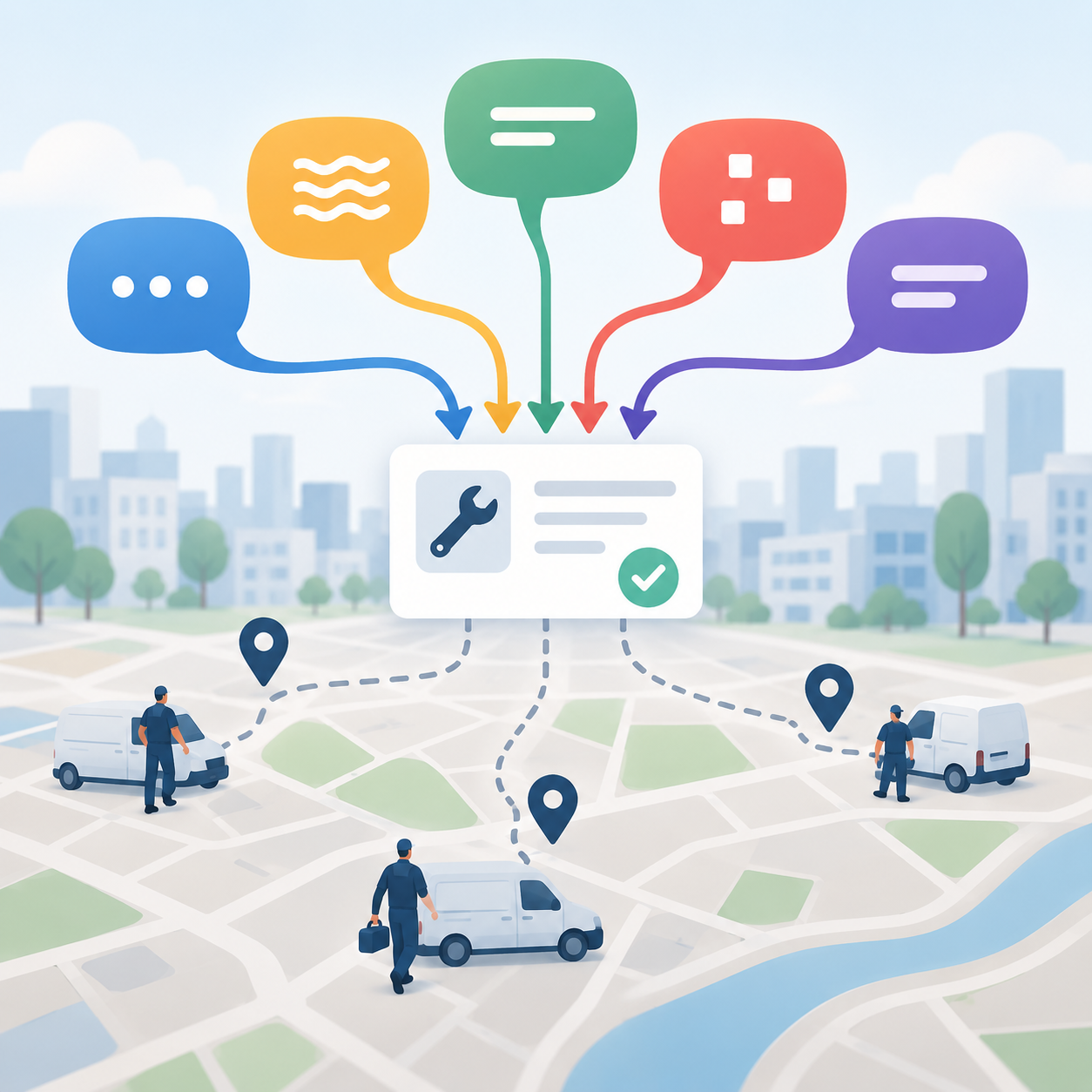
A better approach places language support where information is already processed. The request can be translated, summarized, standardized, and checked before it moves into scheduling or dispatch.
Fieldcode, for example, has introduced AI-supported workflows for multilingual field service communication that can translate, summarize, and standardize ticket information within configured workflows.
The technology still needs clear rules. Teams should decide which fields can be translated automatically, which safety or compliance messages need human review, and how the original text will remain available for checking.
Standard terminology is equally important. Asset names, fault codes, parts, statuses, and completion outcomes should not change every time a sentence is translated.
This structure can reduce manual coordination because dispatchers no longer need to find an available colleague for every message. It also gives technicians clearer instructions and helps customer service produce updates that match the actual job status.
Voice AI service intake can support the same goal by collecting customer details in different languages. Critical information should still be repeated or confirmed before the request is created.
Local Teams Need to Measure Language-Related Friction
Multilingual field service should be measured through operational outcomes rather than the number of languages a platform supports. A long language list means little if important job details are still being lost.
Teams can review how often tickets require manual translation, how many are reclassified after intake, and whether misunderstandings lead to rescheduling, repeat visits, or customer complaints.
They should also check whether technicians receive clear instructions and whether completed notes can be understood by dispatch, customer service, and the customer. Repeated clarification calls may show that the process is not working.
Feedback from local teams matters. Dispatchers know which phrases cause confusion, technicians know which instructions are unclear, and customer service teams know which updates customers regularly misunderstand.
The goal is not to remove every language difference. It is to ensure those differences do not prevent the next person from taking the correct action.
Multilingual field service has become a local issue because modern service networks are already multilingual. Customers, employees, and partners do not need to cross a national border for language to affect the job.
When language is treated as part of intake, dispatch, execution, and closure, the meaning of the request is protected from beginning to end. That leads to clearer appointments, better-prepared technicians, safer decisions, and fewer avoidable delays.