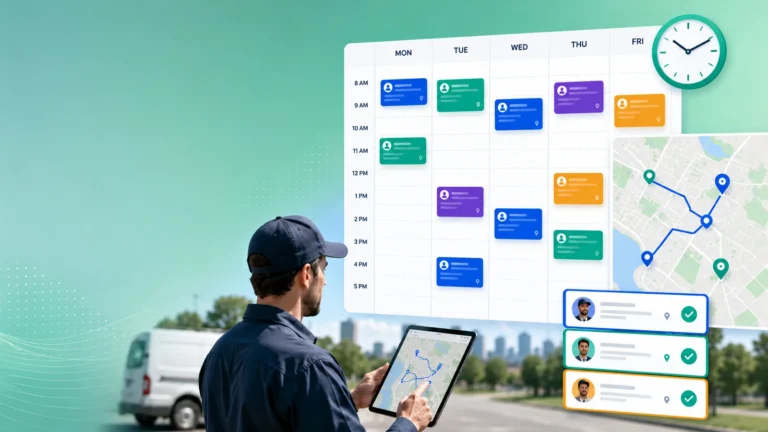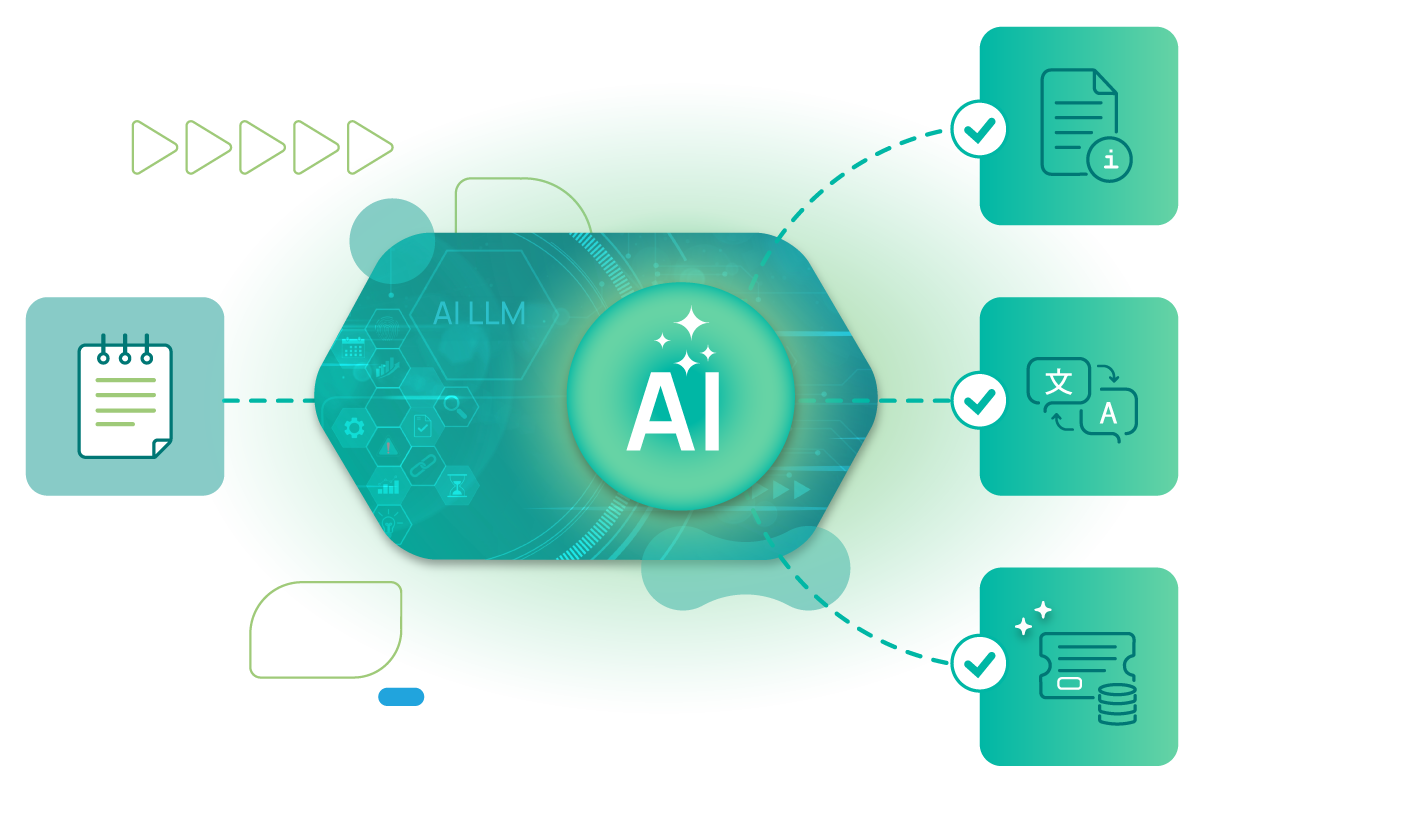
Fieldcode is extending the use of its AI LLM actions to help service organizations manage multilingual communication inside field service workflows.
The update focuses on a common operational issue: field service information often arrives in different languages, formats, and levels of detail before it reaches dispatchers, technicians, customer service teams, or partner networks. Fieldcode’s AI LLM actions are designed to translate, summarize, and standardize this information directly within configured workflows, rather than requiring teams to copy ticket details into separate translation or AI tools.
Key takeaways
- Fieldcode’s AI LLM actions support multilingual service communication inside field service workflows.
- The capability can translate, summarize, clean up, and standardize ticket or object data.
- The update is relevant for international service teams and organizations with multilingual customers, technicians, subcontractors, or support centers.
- AI-supported outputs can help prepare clearer information before scheduling, dispatching, escalation, customer updates, or field execution.
- The functionality supports Fieldcode’s Zero-Touch approach by reducing manual handling of unclear or inconsistent service data.
What Fieldcode announced
Fieldcode, a provider of field service management software, is expanding how its AI LLM actions can be applied to multilingual service communication.
The functionality allows administrators to define when an AI-supported action should run, which ticket or object fields should be included, and how the output should be used in the workflow. Depending on the configuration, the output can support translated summaries, standardized service notes, cleaned-up field content, customer-facing updates, or technician-ready instructions.
This is intended to help service organizations turn multilingual and inconsistent ticket information into clearer operational input before the next step in the service process.
Why multilingual communication creates field service friction
In field service operations, the ticket often contains the information needed to move work forward. The problem is that the information may not be immediately usable.
A customer may submit a request in one language. Internal notes may be added in another. A dispatcher may need to understand the issue quickly, while a technician may need a concise version of the task in a different language or a more standardized format.
When this information has to be manually translated, rewritten, or clarified, the service process can slow down before the work even reaches scheduling or dispatch.
Fieldcode’s AI LLM actions are positioned to address this by keeping language and content preparation connected to the operational workflow.
How the AI LLM actions fit into field service workflows
According to the announcement, Fieldcode’s AI LLM actions can be applied to both ticket-based and object-based workflows. This gives service organizations flexibility across different processes, including customer communication, internal ticket preparation, technician instructions, and partner collaboration.
Examples of supported workflow outputs include:
- translated ticket summaries
- standardized service notes
- cleaned-up field content
- customer-facing status updates
- technician-ready task instructions
- structured next steps before dispatch or escalation
The operational value is not only translation. The broader use case is making service information easier to act on before the next team, system, or workflow step depends on it.
Why this matters for field service
Multilingual communication is not only a concern for global service organizations. It can also affect companies operating in one country when customers, technicians, subcontractors, partner networks, or support teams work in different languages.
For field service teams, language issues often appear as operational delays. Dispatchers may need more time to understand the ticket. Technicians may arrive with incomplete instructions. Customer-facing teams may need to rewrite updates manually. Partner teams may require additional clarification before they can act.
By applying AI-supported translation, summarization, and standardization directly inside workflows, service organizations can reduce some of this manual preparation work. This can support faster ticket handling, more consistent communication, and clearer handoffs between service teams.
Fieldcode’s Zero-Touch context
Fieldcode connects the announcement to its broader Zero-Touch field service approach. In this context, Zero-Touch refers to reducing manual intervention as service work moves from request creation to scheduling, dispatching, communication, and execution.
Multilingual and inconsistent ticket data can interrupt this process because someone often has to interpret, translate, or rewrite information before the workflow can continue. Fieldcode’s AI LLM actions are designed to reduce that manual step by preparing clearer workflow outputs automatically.
That makes the update less about adding AI as a standalone tool and more about embedding AI-supported text handling into existing service workflows.
CEO comment
“Multilingual service communication often creates friction before work can move forward,” said Matthias Lübko, CEO of Fieldcode. “A ticket may contain the right information, but it still needs to be translated, summarized, or standardized before another team can use it. With AI LLM actions, service organizations can handle this directly inside the workflow and turn multilingual service data into clearer next steps.”
FSM News perspective
For field service leaders, multilingual communication is often treated as a customer service issue. In practice, it also affects dispatching accuracy, technician productivity, escalation handling, and service workflow consistency.
The Fieldcode update reflects a wider shift in field service software: AI is becoming more useful when it is applied to specific operational steps rather than positioned as a separate assistant. In this case, the AI function supports the preparation of ticket and object data at the point where that information already moves through the service process.
For organizations managing distributed teams, multilingual customers, or subcontractor networks, this type of workflow-level AI can help reduce avoidable manual work before service execution begins.
About Fieldcode
Fieldcode is a field service management software provider with 25 years of global expertise. Its platform supports automated field service processes, including ticket movement from creation to technician assignment, with the goal of reducing manual coordination work for dispatchers and service teams.
FAQs
What did Fieldcode announce?
Fieldcode announced an expansion of its AI LLM actions to support multilingual communication in field service workflows. The actions can translate, summarize, and standardize ticket or object data inside configured workflows.
How can this help field service teams?
It can help service teams prepare clearer ticket information before scheduling, dispatching, escalation, customer communication, or field execution. This reduces the need to manually translate or rewrite service information outside the workflow.
Is this only relevant for international service organizations?
No. The announcement also applies to teams that work with multilingual customers, technicians, support centers, subcontractors, or partner networks within the same country.