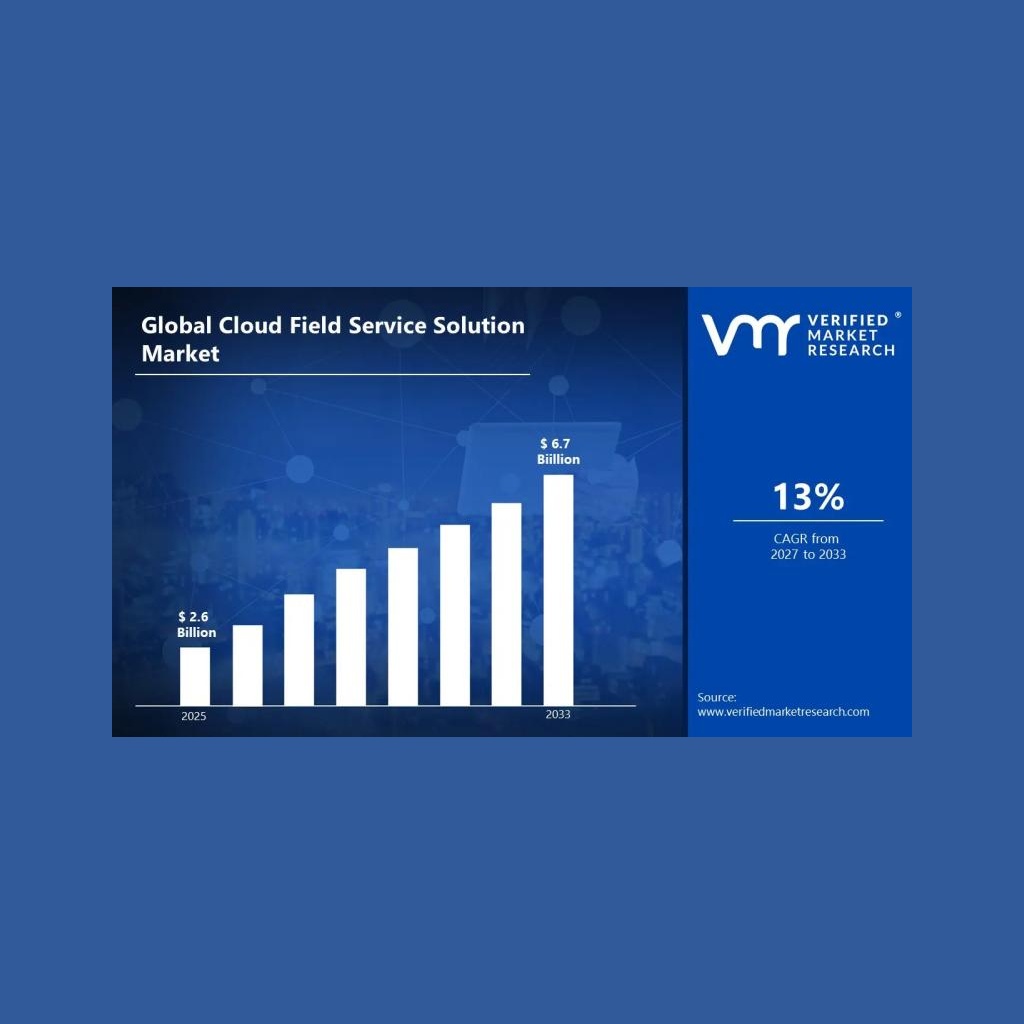
A new market report from Verified Market Research points to continued investment in cloud-based field service solutions, as service organizations look for more flexible ways to manage scheduling, dispatching, technician productivity, compliance and customer communication.
The report, published through openPR on June 30, 2026, states that the global cloud field service solution market was valued at USD 2.60 billion in 2025 and is projected to reach USD 230.00 billion by 2033, with a stated CAGR of 13.0% during the forecast period.
While the size projection should be read as a market-research estimate, the operational direction is clear: field service teams are moving away from disconnected or on-premise systems and toward cloud platforms that can support mobile workforces, real-time visibility and more automated service workflows.
Key takeaways
- Verified Market Research says demand is being driven by cloud adoption, mobile workforce management and the need for real-time operational visibility.
- AI, IoT, analytics and automation are identified as important technology areas shaping field service software investment.
- The report highlights scheduling, dispatching, asset management, customer engagement and predictive maintenance as core use cases.
- North America is described as the leading region, with approximately 38% of the global market share.
- SMEs are presented as a growing adoption segment as subscription-based cloud platforms reduce the need for upfront infrastructure investment.
What the report says about market demand
According to the announcement, organizations with distributed service teams are looking for centralized platforms that can coordinate technicians, manage service requests, monitor assets and maintain communication between office teams, customers and field workers.
The report also connects demand to compliance and governance. In regulated industries, field service workflows often require audit trails, standardized processes and secure data handling. Cloud platforms can support these requirements while also improving transparency across service operations.
AI is another theme in the report. Verified Market Research points to intelligent scheduling, automated dispatching, predictive maintenance recommendations and remote assistance as examples of capabilities that can reduce manual work and improve service execution.
Why this matters for field service
For field service organizations, the shift to cloud-based platforms is less about software deployment alone and more about how daily operations are coordinated.
Many service teams still manage work across separate tools, spreadsheets, manual dispatch processes, phone calls and delayed status updates. That setup makes it harder to protect SLAs, adjust schedules, manage technician availability or give customers accurate information.
Cloud field service platforms address this by creating a shared operational layer for service intake, planning, dispatching, technician execution, documentation and customer communication. When AI, mobile apps and analytics are added to that layer, the software can support faster decisions and reduce the amount of manual coordination required by dispatchers and back-office teams.
This is especially relevant for organizations managing high work order volumes, multiple regions, subcontractor networks or assets that require recurring maintenance.
FSM News context
The announcement reflects a broader trend already visible across the field service management market: buyers are placing more emphasis on automation, mobile execution, AI-supported scheduling and connected customer communication.
However, market growth projections should not be the only signal service leaders use when evaluating software. The more practical question is whether a platform can improve the specific workflows that affect service performance: intake quality, dispatch decisions, route planning, technician readiness, SLA control, reporting and follow-up communication.
For SMEs, cloud adoption can lower technical barriers because less infrastructure is required. For larger organizations, the value is often tied to standardization, governance, integration and scalability across multiple service teams or countries.
Market segmentation covered
The release says the report analyzes the cloud field service solution market by component, deployment type, organization size and region.
By component, the market is divided into solutions and services, with the solution segment described as holding the dominant share. By deployment type, the report covers public cloud, private cloud and hybrid cloud models. By organization size, it looks at both large enterprises and SMEs.
The study also references 15 market segments, five major regions and five key market players across more than 240 pages of research.
FAQ
What is a cloud field service solution?
A cloud field service solution is software delivered through cloud infrastructure to help organizations manage service requests, scheduling, dispatching, technician work, asset data, customer communication and reporting.
Why are cloud platforms becoming more common in field service?
Cloud platforms can make it easier to update software, connect teams, centralize data, support mobile technicians and scale operations without relying heavily on on-premise infrastructure.
How is AI used in cloud field service management?
AI can support field service operations through scheduling recommendations, automated dispatching, work order prioritization, predictive maintenance insights, technician support and customer communication workflows.
References
- Source press release:
https://www.openpr.com/news/4564247/cloud-field-service-solution-market-insights-transforming - Report sample link:
https://www.verifiedmarketresearch.com/download-sample