Choosing between ServicePower and Praxedo is not really about who has the longer feature list.
It is about which platform fits the way your field service operation actually works.
ServicePower presents itself as an AI-powered platform built for employed, contracted, and blended workforces, with public product pages highlighting contractor management, workforce selection, customer self-service, analytics, and per-technician pricing for employed workforce scenarios. Praxedo positions itself around AI-powered scheduling, technician mobility, real-time updates, and field operations support through a web application plus mobile app experience.
That difference matters from the start.
Start with the workforce model
This is where ServicePower stands out most clearly.
Its official blended workforce page says the platform helps organizations manage, dispatch, and optimize jobs across employed and contracted service providers, using data such as skills, certifications, availability, and past performance to match requirements with the right worker.
Praxedo’s public story feels different.
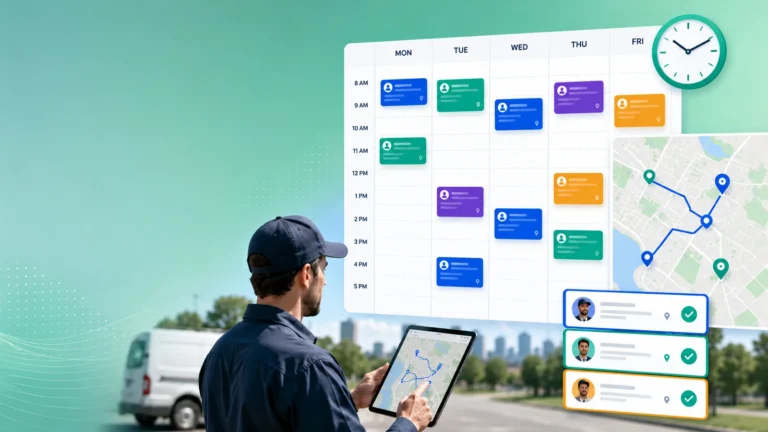
Its homepage and app materials focus more on AI-powered scheduling, real-time schedule updates, mobile execution, map-assisted planning, geolocation, traffic updates, recurring work order scheduling, and technician-facing workflow support.
So if your core challenge is mixed labor structure and contractor coordination, ServicePower looks stronger from its public positioning.
If your core challenge is day-to-day field execution with strong scheduling and mobility, Praxedo looks more directly aligned.
Feature comparison: both cover core FSM, but the emphasis is different
In broad terms, both vendors cover the core FSM areas.
Both talk about scheduling, mobile access, customer experience, and AI support. But the emphasis is not the same. ServicePower’s pricing and solution pages center on employed and blended workforce management, customer self-service, analytics, work order management, and Vision AI. Praxedo’s public materials center more on scheduling optimization, map-assisted planning, technician mobility, configurable workflows, offline capability, and real-time coordination between office and field teams.
That means this is not just a checklist comparison.
It is really a comparison of product priorities.
ServicePower feels more enterprise-operational.
Praxedo feels more execution-focused for office and field coordination.
Which one looks stronger for dispatch automation
If dispatch automation is the main buying priority, both vendors deserve attention, but they present it differently.
ServicePower emphasizes workforce matching and assignment across employed and contracted labor, using technician data to improve job allocation. Its blended workforce positioning strongly suggests that assignment logic is one of the main value points.
Praxedo’s public app and product materials emphasize real-time schedule updates, constraint-based schedule optimization, recurring work order automation, geolocation, and traffic-aware planning. That suggests a strong operational focus on keeping the daily schedule usable and adaptable.
So the difference is subtle but important.
ServicePower looks more automation-heavy around workforce assignment complexity.
Praxedo looks stronger around the practical flow of daily scheduling and field coordination.
The role of AI in improving assignment quality and reducing replanning pressure is explored further in our article on AI field service scheduling.
Pricing comparison: ServicePower is consultative, and Praxedo appears quote-led
ServicePower publishes the structure of its pricing model but requires buyers to request actual pricing. Its employed workforce offering uses per-technician or per-adjuster pricing, while contracted workforce pricing can be based on transactions or service events.
Praxedo is more transparent on public pricing. It currently (September 2, 2026) lists four per-user plans: Basic at $39, Advanced at $69, Optimized at $99, and Automated at $149 per user per month, alongside customized plans for large enterprises.
That makes Praxedo the more transparent option on public pricing today, while ServicePower remains primarily quote-led.
Mobile experience and technician usability
Praxedo has the clearer public story on technician usability.
Its mobile app listing highlights real-time schedule updates, map views, signatures, photos, videos, offline mode, remote collaboration, and document sharing, while the paired web application handles schedule optimization and real-time activity management.
ServicePower clearly supports field operations too, but the public message here feels less centered on mobile simplicity and more centered on the bigger orchestration layer around work order management, workforce type, and customer self-service.
So if your buying team is especially focused on technician adoption and practical mobile workflow quality, Praxedo may feel more immediately compelling from the public product story.
Technician usability is explored further in Why Technician Experience Matters in Modern FSM. Field tools matter most when they reduce friction for the people doing the work.
Customer communication and self-service
Both vendors talk about customer experience, but again the framing differs.
ServicePower highlights customer self-service directly on its pricing page for employed workforce capabilities. Praxedo’s product materials emphasize notifications, work order tracking, and stronger coordination between office, field teams, and customers through a connected app model.
That makes Praxedo’s communication story feel more operational and appointment-centered.
ServicePower’s communication story feels more platform-wide and enterprise-structured.
Neither is automatically better. It depends on whether you want communication features as part of a broader service orchestration model or as part of a highly practical daily coordination flow.
Which one looks better for blended workforce complexity
This is where ServicePower has the clearer edge.
Its official positioning is unusually explicit about supporting blended workforce environments and using contractor and employee data together in scheduling and dispatch decisions.
Praxedo may still work well in distributed service organizations, but its public positioning is not centered on contractor ecosystems in the same way. It is centered more on technician scheduling, mobility, and field execution flow.
So if workforce complexity is the defining issue, ServicePower deserves the closer look.
Which one looks better for day-to-day execution clarity
This is where Praxedo becomes more compelling.
Its public product story is easy to follow. The web application handles scheduling and activity management. The mobile app keeps technicians updated in real time. The planning model uses map logic, traffic data, and recurring work order scheduling.
That clarity makes it feel like a strong fit for service organizations that want better operational flow without buying for a level of contractor governance they may not actually need.
This relationship is explored further in How Better Job Data Improves Dispatch Decisions. Better scheduling and better field reporting tend to reinforce each other in daily operations.
Implementation fit
Implementation style is another likely difference.
ServicePower looks like the more enterprise-style rollout, especially for businesses that need support across employed, contracted, and blended workforces. Praxedo looks more like a practical deployment centered on technician workflows, scheduling control, and mobile coordination. That is not a promise about every single implementation, but it is a grounded read of how both vendors publicly present themselves.
So for field service implementation, the better fit depends on how much organizational complexity you need the platform to absorb from day one.
Conclusion
The real difference in ServicePower vs Praxedo is not that one platform is modern and the other is not.
It is that they appear built for different types of service pressure.
ServicePower presents itself as a strong option for organizations managing employed, contracted, and blended workforces with structured assignment logic and enterprise service coordination. Praxedo presents itself as a strong option for teams that want better technician scheduling, mobile execution, and day-to-day service flow.
That is the comparison that really matters.
Because the right FSM platform is usually the one that matches the way your service business already operates, not the one with the most ambitious homepage.