
Saad Atique's Posts
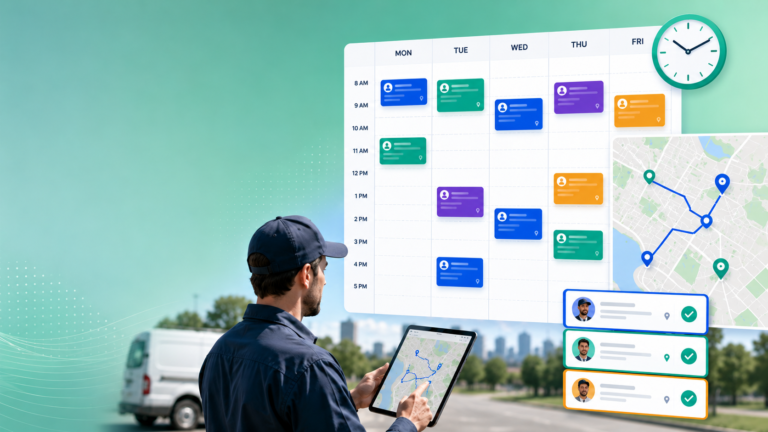
What Makes Smart Scheduling Work in Field Service
A schedule can look full and still be poorly built. That is one of the biggest misunderstandings in field service. When people talk about scheduling, they often focus on volume. How many jobs were assigned. How many technicians were booked. How many appointments fit into the day. But smart scheduling is not just about fitting […]

How AI Is Changing Field Service Dispatch
Dispatch has always been one of the most demanding parts of field service. On a calm day, it already requires constant judgment. On a busy day, it becomes even harder. New jobs come in, customer availability changes, technicians run late, urgent work pushes planned work aside, and the entire board can start shifting by the […]

ServicePower vs Praxedo: Head to Toe Field Service Software Comparison
Choosing between ServicePower vs Praxedo is not really about who has the longer feature list. It is about which platform fits the way your field service operation actually works. ServicePower presents itself as an AI-powered platform built for employed, contracted, and blended workforces, with public product pages highlighting contractor management, workforce selection, customer self-service, analytics, […]

Why 24/7 Service Intake Is Becoming a Competitive Requirement
Field service customers do not only have problems during office hours. That is the first reason 24/7 service intake is becoming more important. The second reason is that customer expectations have changed. More service organizations are being judged not just on whether they can fix the issue, but on how easy it is to reach […]

Why Exception Management Matters in FSM
Field service does not usually fall apart because of the routine work. It falls apart because of the exceptions. The delayed technician. The missing part. The job that was classified wrong. The customer who is suddenly unavailable. The urgent ticket that cuts across the day. The appointment that looked simple in the morning and turns […]

The End of Manual Dispatching: How Fieldcode Introduces Voice AI into Field Service Execution
Manual dispatching has not disappeared from field service. But the pressure on it is getting harder to ignore. Service teams are dealing with higher call volumes, tighter response expectations, more scheduling changes, and more customer demand for faster updates. At the same time, dispatchers are still expected to gather job details, classify urgency, update tickets, […]

How FSM Platforms Support Multi-Region Service Teams
Running field service in one area is hard enough. Running it across multiple regions is a different level of complexity. You are not just managing more technicians. You are managing different territories, different demand patterns, different travel realities, different customer expectations, and sometimes different operating habits too. That is why multi-region service teams need more […]

How AI Optimizes Field Service Scheduling and Reduce Dispatch Costs
Field service scheduling looks simple from a distance. A job comes in. A technician gets assigned. The route gets built. The customer gets a time window. The work gets done. In reality, the process is much messier than that. Customer availability changes. Travel times shift. Jobs run longer than expected. Emergency work pushes planned work […]

What Slows Down Field Service Resolution Times
Slow service is rarely caused by one big failure. More often, it is the result of small weaknesses stacking up across the workflow. A vague ticket. A rushed dispatch decision. A missing part. A technician arriving without enough context. A customer waiting for updates while the day slips further off track. That is why field […]

How Better Job Data Improves Dispatch Decisions
Good dispatch starts with good information. That sounds obvious, but many field service teams still try to make fast decisions with incomplete job details, vague issue descriptions, and missing asset history. Then they wonder why the wrong technician gets assigned, the visit takes longer than expected, or the customer needs a second appointment. That is […]