IoT alerts are easy to talk about in theory.
In practice, their value depends on what happens next.
An asset sends a signal. A threshold is crossed. A fault pattern appears. A performance issue starts building. But none of that creates value on its own. It only matters if the service team can turn that signal into the right action at the right time.
That is why the real conversation is not just about connected devices. It is about smarter dispatch. Connected service and predictive maintenance are most useful when IoT data improves maintenance decisions and helps teams act on emerging issues before they escalate.
More asset data does not automatically mean better service
A lot of field service teams still assume that more asset data will naturally improve performance.
That is not always true.
If IoT alerts keep flowing into the business without good triage, they create noise instead of clarity. Dispatchers get more signals, but not more confidence. Technicians receive jobs before the issue has been properly diagnosed or prioritized. Customers get visits that feel proactive on paper but still lead to delays or repeat work in reality.
That is why connected assets need decision logic around them. The alert should help answer a practical question: does this issue require dispatch now, remote action first, or no field visit at all? A rising repeat-dispatch rate can indicate that the original service action did not fully resolve the issue.
The best IoT alerts improve triage before dispatch starts
The strongest use of IoT alerts is not sending more jobs into the queue.
It is improving the quality of the queue.
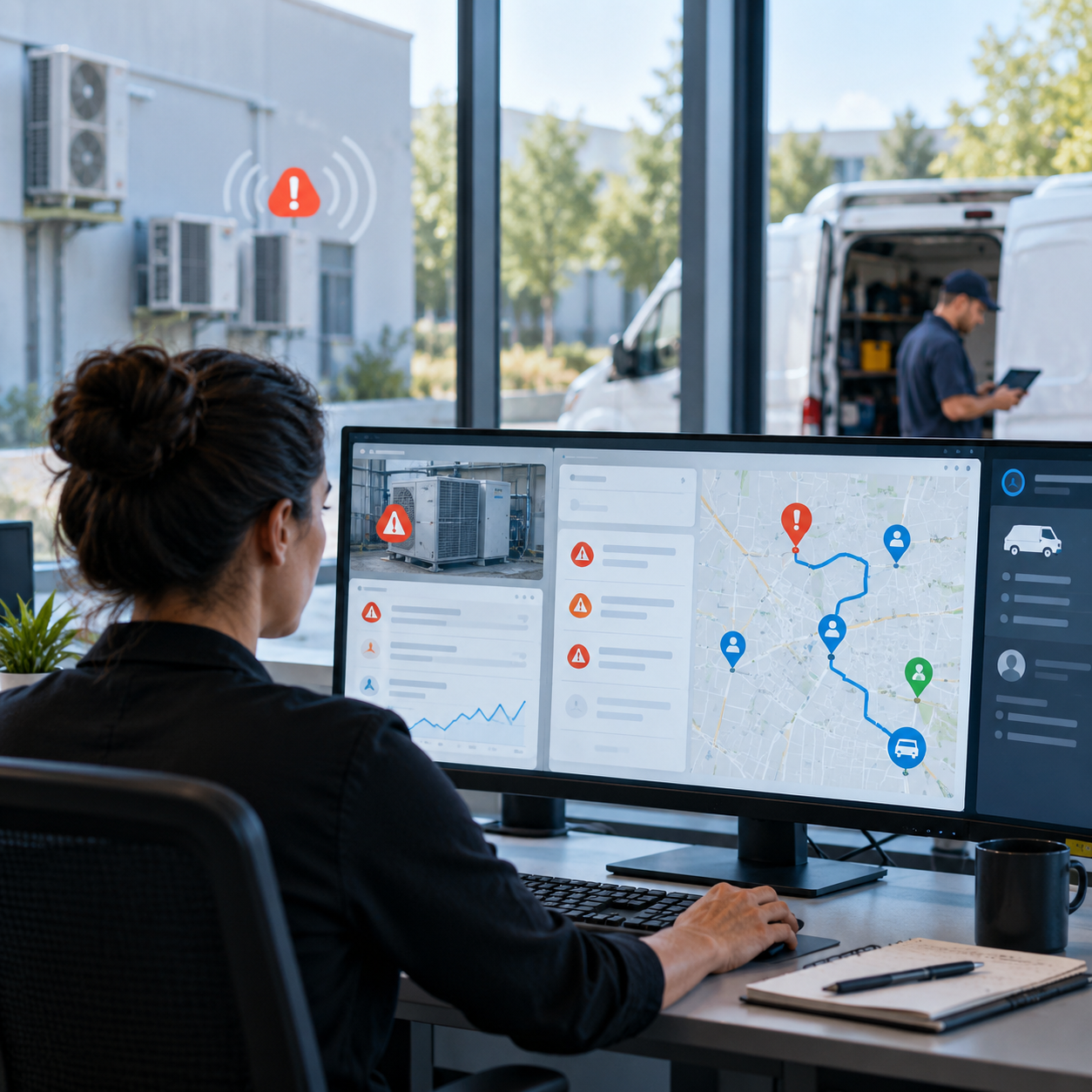
When connected assets provide usable context, service teams can see what changed, when it changed, how severe it is, and whether the symptom matches a pattern they already know. That improves triage before anyone starts moving appointments around.
Dispatch problems often begin before scheduling, when ticket details, priorities, parts requirements, or skill needs are still unclear. Structured IoT data can reduce that uncertainty by giving teams stronger context before a technician is assigned.
Smart dispatch starts with deciding which alerts deserve action
Not every signal should trigger a truck roll.
That is where many IoT strategies become expensive.
A connected asset may detect abnormal behavior, but abnormal does not always mean urgent. Some alerts deserve immediate field response. Some belong in a remote support flow. Some should be grouped with planned maintenance. Some only need monitoring unless the condition worsens.
This is where smart dispatch becomes essential. The dispatch process needs rules that separate high-value alerts from background noise. The objective is to use AI and data where they improve operational decisions, rather than increasing automation for its own sake.
Connected assets are only useful when dispatch can trust the data
Trust matters here more than people admit.
If dispatchers repeatedly see alerts that do not lead to meaningful action, they stop trusting the signal. Once that happens, the operation falls back into manual habits. Teams start treating connected data as an extra layer rather than a core input.
That is why field service data has to be credible, not just available.
The signal should be specific enough to guide a decision. It should connect to the asset history. It should support severity scoring. It should help the team understand whether this is a known recurring issue, a likely false alarm, or an early warning that deserves attention now.
Geotab’s 2026 telematics trends research describes telematics as moving from a back-office utility to an ‘operational brain,’ with connected data supporting more predictive, data-driven operations.
Better dispatch decisions come from context, not alerts alone
The alert itself is rarely enough.
Dispatch quality improves when the service team combines the signal with the surrounding context. What asset is involved? What happened on the last service visit? Is the site under contract pressure? Is this type of part failure common? Is there a technician nearby with the right skill set? Is a remote fix possible first?
That mix is what turns IoT alerts into better service decisions.
Without it, connected service becomes reactive in a new format. Instead of responding to customer calls, the business responds to machine-generated events. That may look more modern, but it does not automatically make the response smarter. Earlier awareness only creates value when it leads to better prioritization and response decisions.
Smarter dispatch can improve service response times without overscheduling
One of the best outcomes of connected service is better timing.
When IoT alerts provide earlier warning, teams can prepare before the issue becomes more disruptive. That can improve service response times, reduce emergency pressure, and create more room to assign the right technician with the right preparation.
But that only works when dispatch avoids the trap of overreacting.
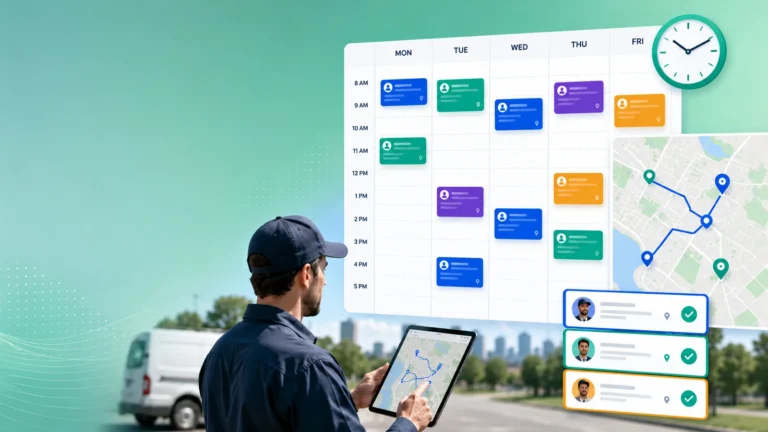
If every alert becomes an urgent appointment, the schedule fills with work that may not belong there yet. The operation becomes busier without becoming better. Real-time routing and dispatch tools can support this by rebalancing workloads and adjusting routes as conditions change. The goal is not just faster movement. It is better movement.
The biggest win may be fewer unnecessary visits
A strong IoT strategy does not always create more field work.
Sometimes it creates less.
That is because connected assets can help the service team decide when not to dispatch. If the signal suggests the issue can be handled remotely, if the condition is stable enough for scheduled service, or if the alert turns out to be noise rather than failure, a truck roll may not be the best response.
That matters because smarter service is not just about acting quickly. It is about acting appropriately.
The real benefit of smart dispatch is not sending more people out faster. It is choosing the right response path based on better information, whether that means remote support, planned maintenance, or an on-site visit.
IoT alerts also improve preparation for the visits that do happen
Even when a field visit is needed, connected data can still improve the outcome.
If the alert shows a likely fault pattern, recent performance changes, or known asset behavior, the team can prepare better. Parts planning and technician assignment can both improve. Assignment quality improves. The technician arrives with stronger context. That makes first-time resolution more realistic.
This is one reason connected service is being discussed alongside cost optimization, remote diagnostics, and first-time fix improvement across the broader field service market. FSM News has explained in its coverage of remote diagnostics that the expansion of IoT-enabled assets is increasing opportunities to diagnose issues remotely and improve service decisions before an on-site visit.
The real goal is not more alerts. It is better action.
Service leaders should be careful not to mistake visibility for maturity.
Seeing more is useful.
Acting better is what matters.
A strong connected-service model filters alerts well, ranks them intelligently, links them to asset and service history, and helps the dispatch team decide what deserves immediate action. That is how connected assets support the operation instead of overwhelming it.
This also fits the broader AI and automation conversation in field service right now. The practical winners are not the teams collecting the most data. They are the ones turning data into better priorities, cleaner workflows, and more reliable service decisions.
Conclusion
IoT alerts only become valuable when they lead to smarter choices.
They help most when they improve triage, strengthen smart dispatch, add context around connected assets, and turn raw field service data into better action. They can also improve service response times when the team uses them to prepare earlier and assign more intelligently.
For field service teams, that is the real shift.
The question is no longer whether assets can talk.
It is whether the service operation knows how to listen well enough to dispatch smarter.