Manual dispatching has not disappeared from field service.
But the pressure on it is getting harder to ignore.
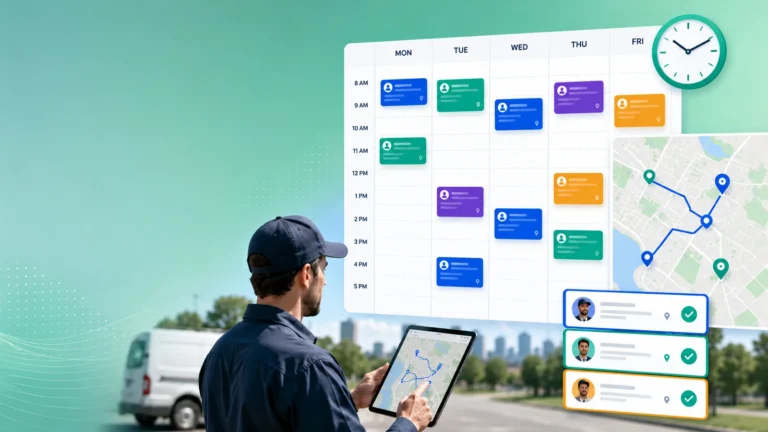
Service teams are dealing with higher call volumes, tighter response expectations, more scheduling changes, and more customer demand for faster updates. At the same time, dispatchers are still expected to gather job details, classify urgency, update tickets, assign technicians, and keep the schedule moving when the day changes. Fieldcode’s current product and content pages position Voice AI as a response to that pressure by automating inbound and outbound service calls, capturing issue details, scheduling appointments, and updating tickets directly inside the FSM workflow.
That is where Fieldcode Voice AI becomes relevant. Rather than operating as a standalone AI tool, it connects customer conversations with the processes that turn a request into scheduled field work.
It is being presented as part of a broader move away from manual service coordination and toward faster, more structured field service execution.
Manual dispatch usually breaks at the intake stage
A lot of field service leaders think dispatch becomes manual when the board gets busy.
In reality, the manual burden often starts earlier.
A customer calls. The issue is described loosely. The dispatcher or service desk agent asks follow-up questions. Some details get written down. Others get missed. A ticket is created, but not always with the level of structure needed for a strong assignment. Then dispatch has to work from partial information.
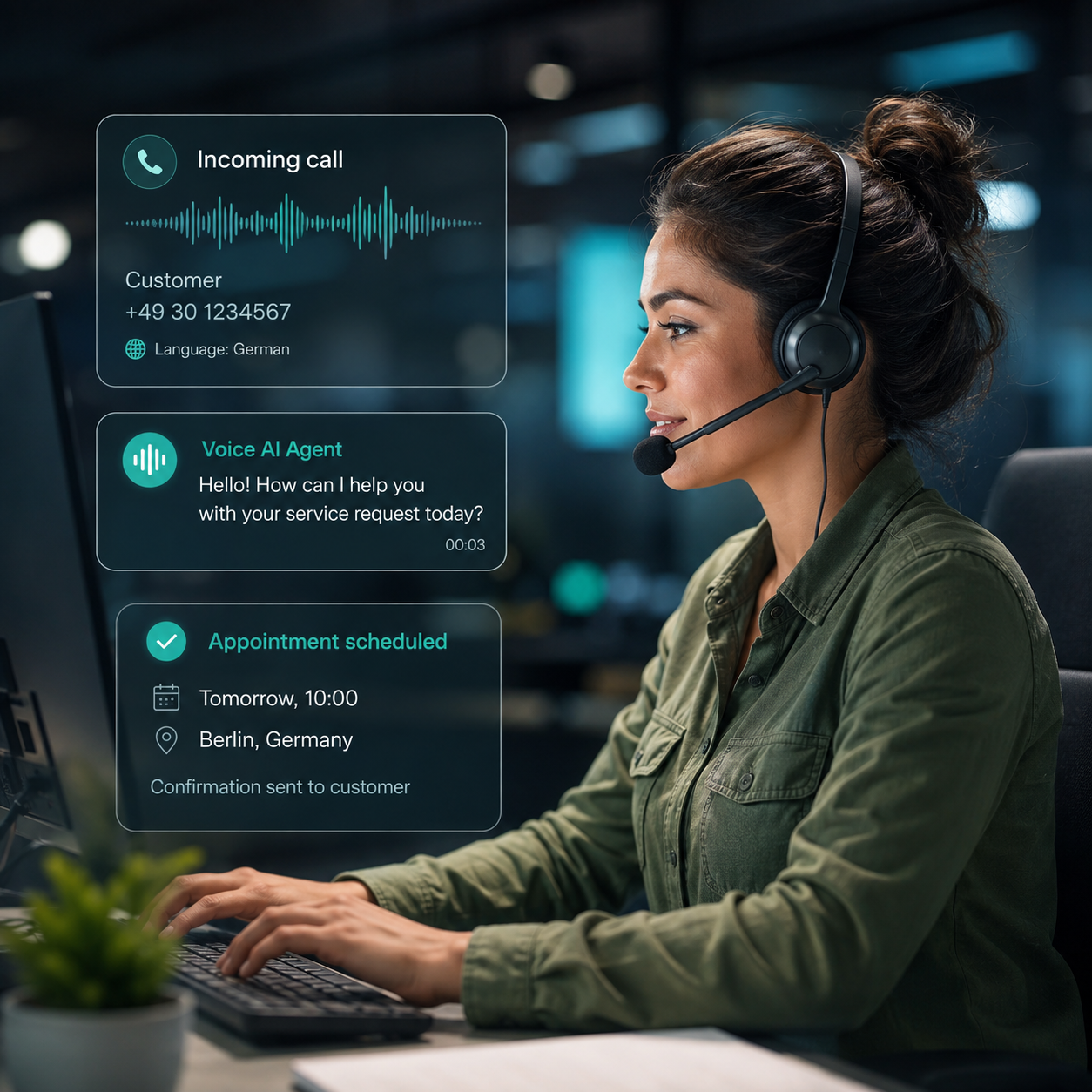
Fieldcode is addressing this gap by connecting Voice AI directly to field service workflows. Its Voice AI agents can answer service calls around the clock, capture the information needed to create or update tickets, and move requests into scheduling without additional manual data entry. Because the agents work with Fieldcode workflows, schedules, and technician data, information collected during the call can feed directly into the next operational step instead of leaving dispatchers to re-enter or reconcile it.
Voice AI changes the first step of service execution
The strongest point in Fieldcode’s current Voice AI story is not simply that the phone gets answered.
It is that the conversation becomes structured operational input.
According to Fieldcode’s own materials, its voice AI agents can collect issue details, ask follow-up questions, validate key information, confirm availability, create or update tickets, and trigger the next workflow step. In other words, Voice AI is being positioned not as a call-center layer, but as part of the service execution chain itself.
That distinction matters.
A basic automated phone system saves a little time.
A structured voice workflow can improve intake quality, reduce manual re-entry, and make downstream scheduling decisions stronger.
That is where dispatch automation becomes more real.
Why this matters for dispatchers
Dispatchers are often buried in work that is necessary but repetitive.
They chase missing information. They confirm customer details. They update tickets that should have been cleaner from the start. They spend time handling status-heavy calls that do not really require high-level planning judgment. Fieldcode’s Voice AI pages explicitly say the tool is meant to reduce manual workload, support high call volumes, and let teams scale service demand without adding headcount at the same pace.
That does not mean dispatchers disappear.
It means the best dispatch talent can focus more on exceptions, schedule conflicts, and decision-heavy cases instead of spending the day cleaning up intake.
This also connects with Which FSM Workflows Should You Automate First, because the workflows that deserve automation first are usually the ones that are repetitive, rules-based, and expensive to handle manually at scale.
Fieldcode is framing Voice AI as always-on service intake
One of the clearest claims on Fieldcode’s official Voice AI integration page is that the system offers always-on voice support and can handle calls instantly, 24/7, in any language. The same page says it can schedule appointments, update tickets, and support faster resolution by matching the right technician through skills, routes, and part availability.
That matters because many service problems begin outside normal business hours.
Calls come in after hours. Customers leave voicemails. Urgent needs appear before the morning planning cycle starts. If those requests wait in a queue until someone manually processes them, response quality is already slipping.
Fieldcode’s pitch is that Voice AI closes that gap.
Better intake quality improves the rest of the workflow
The most practical benefit of Voice AI may be that it makes the job cleaner before dispatch ever touches it.
The value goes beyond simply answering the phone. As shown in Fieldcode’s Voice AI webinar, Voice AI agents can capture and validate the details provided during a customer call and turn them into a structured service request. That gives scheduling and dispatch teams better information from the start, reducing the manual work needed to clarify requests before they can be planned and assigned.
That matters because weak intake creates weak scheduling.
And weak scheduling creates avoidable rework, poor matching, and more manual intervention later.
That is one reason the logic in How to Improve First-Time Fix Rate in 2026 still applies here. Better upstream information increases the chance that the first visit is actually the right visit.
Voice AI also supports consistency under volume
When teams rely purely on people for every intake interaction, quality tends to vary.
A busy moment can shorten the questions. A tired agent may skip something important. A voicemail may sit untouched longer than it should. One person may classify urgency differently from another.
Fieldcode is clearly trying to position Voice AI as a consistency layer. Its content says Voice AI agents can handle high volumes of calls without compromising quality, while also capturing structured information and linking it directly to scheduling and service workflows.
That consistency is important because scaling service is not only about taking more calls.
It is about keeping intake quality stable when demand rises.
This is bigger than phone automation
It would be easy to read Fieldcode’s Voice AI launch as a simple telephony upgrade.
That would undersell what the company is actually emphasizing.
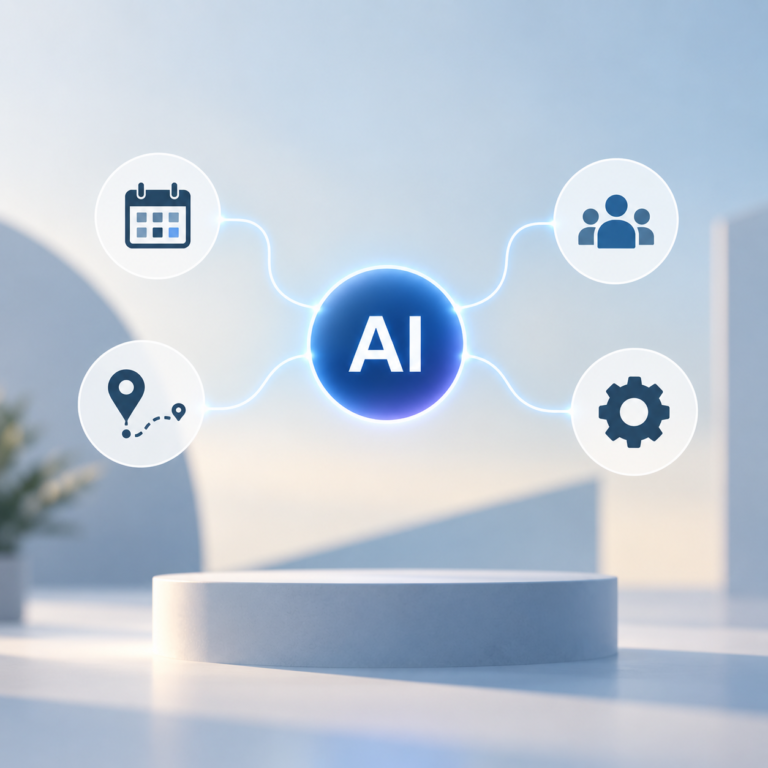
Across its official Voice AI pages and AI field service content, Fieldcode is framing AI around the operational layer: intake, scheduling, routing, workflow automation, technician execution, and customer communication. That suggests Voice AI is being presented as one part of a larger automation model, not a standalone voice widget.
That is why this topic matters for field service execution, not just customer service.
The real question is not whether an AI voice can answer a call.
It is whether that call becomes useful structured work fast enough to reduce dispatch friction.
Conclusion
Fieldcode Voice AI matters because it pushes automation into one of the most manual parts of field service: intake and early coordination.
Fieldcode’s current messaging shows Voice AI agents handling calls 24/7, collecting job details, validating information, updating tickets, and connecting requests directly to schedules and technician data. That makes the feature relevant not just as a communication tool, but as part of a broader model for faster field service execution and stronger dispatch automation.
If that model works as intended, the real shift is not that dispatch becomes fully automatic overnight.
It is that far less of the day begins with manual cleanup.