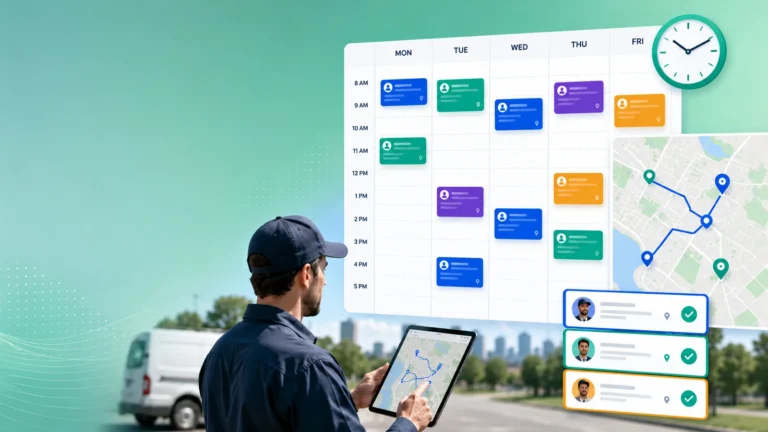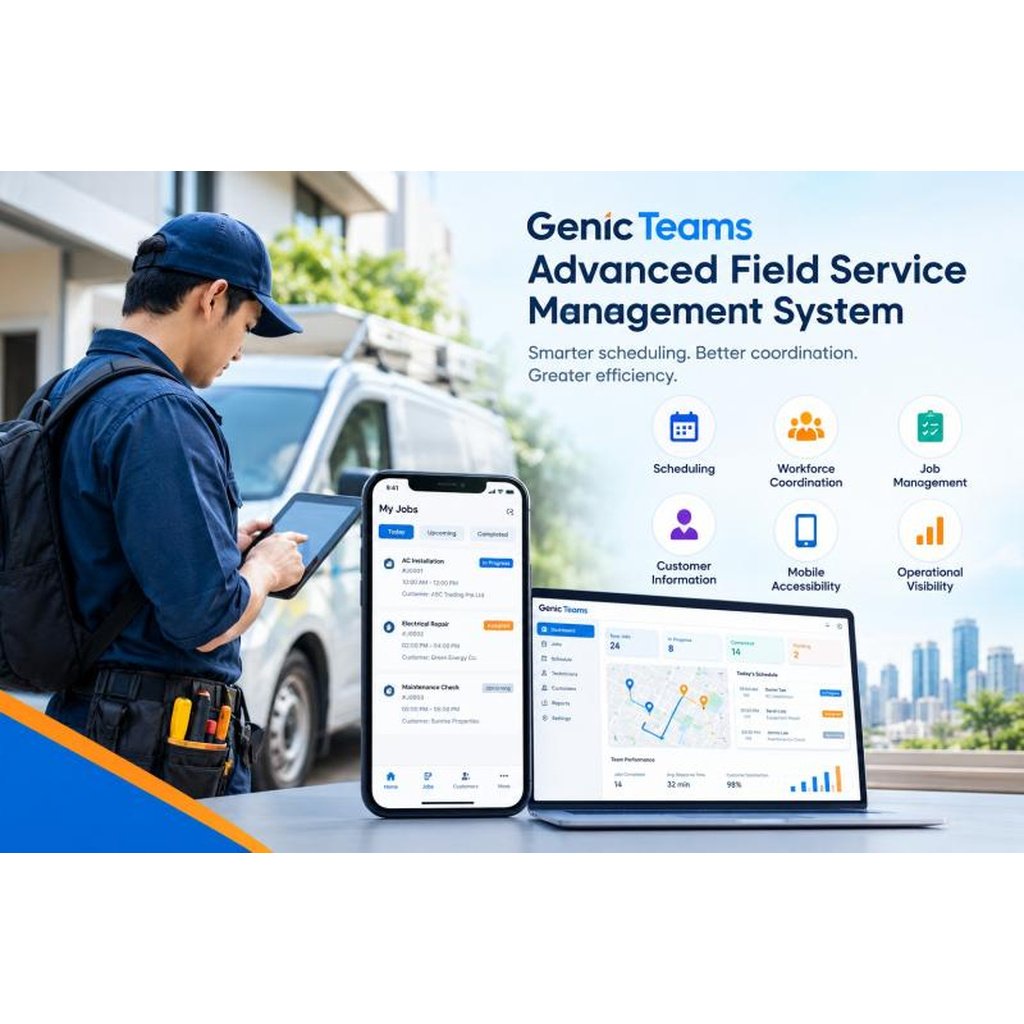
The Genic Teams field service platform has been introduced to bring technician scheduling, job tracking, workforce coordination and customer information into one system.
The new field service management solution targets service businesses that manage technicians and mobile teams. Genic Teams says the platform is designed for organizations ranging from startups and SMEs to established field service operations.
Key takeaways
- Genic Teams has introduced a new field service management platform.
- The system combines technician scheduling, workforce coordination and job tracking.
- Customer information and service records are managed within the same environment.
- Mobile access gives technicians relevant job information while working in the field.
- Managers can monitor assigned work and job progress from a centralized system.
What the Genic Teams field service platform includes
The Genic Teams field service platform brings several operational functions together.
Managers can organize technician schedules, assign jobs and track work as it progresses. Customer information and service details can also be stored alongside ongoing and completed jobs.
The aim is to reduce the fragmentation that can develop when schedules, customer records and job information are spread across spreadsheets, calls, messaging applications and separate systems.
Genic Teams also offers dedicated workforce management software as part of its approach to coordinating field employees.
Scheduling and technician coordination
Scheduling is one of the main functions covered by the platform.
Managers can coordinate technician schedules and assign work according to operational requirements. They can then monitor assigned jobs and follow their progress.
For field service teams, however, scheduling is not simply about placing jobs into available time slots. The quality of the underlying job information also affects whether a schedule works once technicians are in the field.
Smart scheduling in field service depends on accurate job information as well as technician availability and available time slots.
As the number of technicians and service requests increases, having scheduling and job information available in the same environment can make day-to-day coordination easier to manage.
Customer and job information in one system
Genic Teams also combines job management with customer information.
Relevant customer details and service information can be accessed when teams handle a service request. Businesses can also maintain records of ongoing and completed jobs.
This gives managers a more structured view of field activity and provides technicians with additional context when carrying out assigned work.
Centralized records can become increasingly important as service operations grow. Otherwise, teams may need to search across several systems before they have the information required to understand a job.
Mobile access for field technicians
The Genic Teams field service platform is also designed for mobile employees.
Through the company’s field service management application, technicians can access relevant job information while working away from the office.
This helps connect office-based coordination with field execution.
Instead of relying only on calls or messages from a dispatcher, technicians can access information linked to the work they have been assigned. Managers can meanwhile retain visibility into job progress and technician assignments.
Greater visibility into field operations
Operational visibility is another part of the Genic Teams offering.
Managers need to understand which jobs remain open, which technicians are assigned and where attention may be required.
Bringing this information into one platform can provide a clearer view of current field activity. It can also reduce the need to piece together status information from separate tools.
The company says its platform is intended to provide a more structured way to monitor these activities as service businesses expand.
Why this matters for field service
Growth can expose weaknesses in manual field service coordination.
A small team may be able to manage work through direct communication and a few spreadsheets. That becomes harder when more technicians, customers and jobs are added.
Scheduling, customer information, job status and technician activity then need to remain synchronized across a much larger number of service interactions.
A centralized FSM platform can help create a common operating view. However, the practical value depends on how well the software fits the organization’s actual service processes.
Service businesses evaluating systems such as Genic Teams should therefore look beyond whether individual features exist. They should also consider how scheduling, job data, mobile workflows and customer information work together during a normal service day.
What to consider when evaluating Genic Teams
The Genic Teams announcement reflects a wider move toward consolidating field service processes that have traditionally been handled through separate tools.
Scheduling, workforce coordination, job management and mobile execution are closely connected. A change in one area can quickly affect the others.
That is why centralization can matter. A scheduling decision is more useful when the manager can also see the job details, customer information and current field activity behind it.
At the same time, the announcement mainly describes the platform’s core operational functions. It provides less detail about capabilities such as advanced scheduling logic, integrations, automation rules or analytics.
Those areas are likely to be important for organizations comparing the Genic Teams field service platform with other field service management systems.
Frequently asked questions
What is the Genic Teams field service platform?
The Genic Teams field service platform is a system for coordinating field operations. Its announced capabilities include technician scheduling, workforce coordination, job tracking, customer information, mobile access and operational visibility.
Who is the Genic Teams platform designed for?
Genic Teams says the system is designed for service businesses, field service companies, startups, SMEs, operations managers and other organizations that manage technicians or mobile workforces.
Can technicians access Genic Teams in the field?
Yes. Genic Teams provides mobile access so technicians can view relevant job information while carrying out field work. The platform also gives managers visibility into assigned work and job progress.
Source: openpr.com