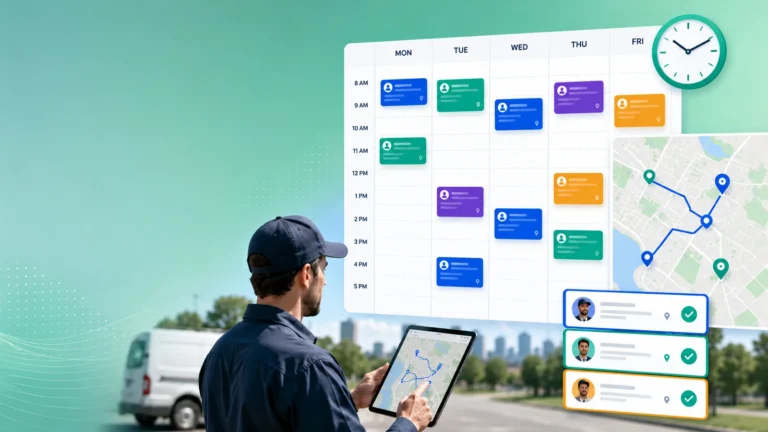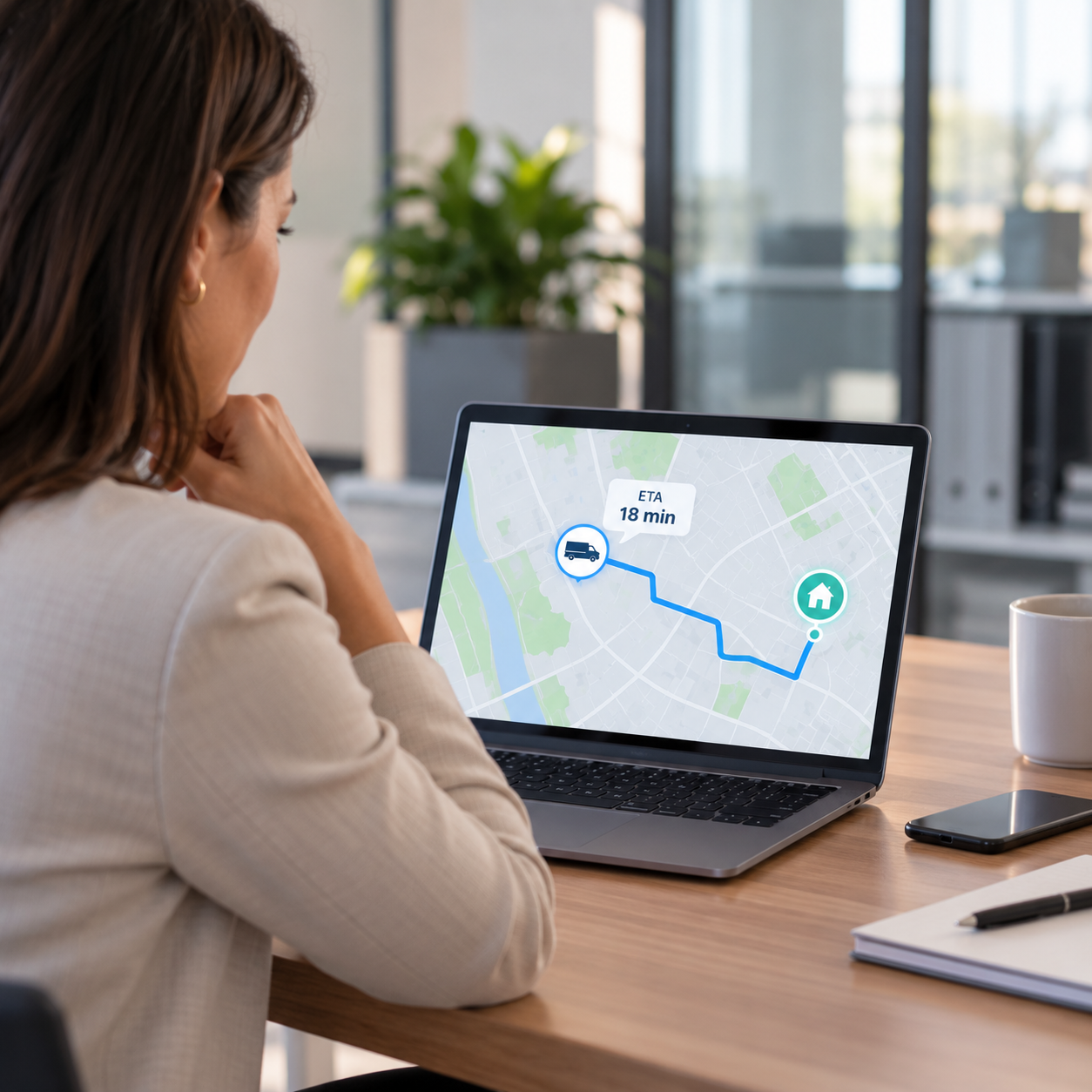
Live ETA (Estimated Time of Arrival) updates look like a small feature until you see what happens without them.
A technician is running late.
The customer has no idea.
The dispatcher gets called twice.
The service desk gets dragged into the same conversation.
The technician arrives frustrated, and the customer is already annoyed before the visit even begins.
That is why live ETA updates matter so much in field service. They do more than share timing. They reduce uncertainty across the whole service chain.
For field service leaders, this is not just about convenience. It is about trust, operational control, and the quality of the customer experience before the work even starts.
Customers do not just care about the visit
Most service teams focus heavily on the appointment itself.
Did the technician arrive?
Was the issue resolved?
Was the SLA met?
Those things matter. But the customer experience starts earlier than that. It starts the moment the customer tries to understand what is happening.
If someone is waiting at home, managing a store, covering a shift, or coordinating site access, silence feels like poor service. Even when the technician is still on the way, the lack of visibility creates tension.
That is where live ETA updates change the experience. They answer the question customers ask most often before a visit: when exactly should I expect someone?
A realistic update can calm a situation faster than a vague promise ever will.
A narrow appointment window is not enough anymore
Traditional appointment windows still have value.
They help set expectations. They help structure the day. They help the customer prepare.
But a four-hour window on its own is no longer enough for many service environments. Customers are used to real-time updates in other parts of daily life. They expect the same level of visibility from service organizations too.
That does not mean every estimate has to be perfect.
It means the customer should not be left guessing.
A broad window may tell the customer when the visit could happen. Live ETA updates tell them how the day is actually unfolding. That difference matters because field service is dynamic by nature. Jobs run long. Traffic shifts. Emergency work enters the queue. Travel times change.
The operation already knows the day is moving. The customer should not be the last person to find out.
Better visibility reduces avoidable calls
When customers do not know what is happening, they call.
They call the service desk. They call the contact center. They call the account manager. Sometimes they call more than once.
Those calls add pressure to teams that are already managing exceptions, schedules, escalations, and technician support. Most of them are not about the technical issue itself. They are simply requests for status.
That is one reason field service communication deserves more attention than it often gets. A lot of inbound volume is caused by uncertainty, not complexity.
When live ETA updates are clear and timely, they can reduce avoidable status calls because customers can see arrival information without contacting the service team. The dispatcher protects time. The service team avoids repetition. The customer feels informed instead of ignored.
That is a small operational shift with a very real cost impact.
Dispatchers should not spend the day translating the schedule
In some organizations, dispatchers become human status-update machines.
They are expected to monitor the board, answer customer timing questions, speak with technicians, and keep everyone aligned while the day changes in real time.
That is not a good use of skilled dispatch talent.
Dispatchers add the most value when they handle exceptions, make judgment calls, and protect service performance. They should not have to spend half the day repeating the same arrival estimate in different ways.
This is why dispatch visibility matters internally as much as it does externally.
The better the system communicates timing automatically, the more dispatchers can focus on decisions that actually move the operation forward. That includes rerouting work, protecting urgent appointments, and solving the cases where automation alone is not enough.
Live ETA updates improve the emotional side of service
Field service performance is often discussed in operational terms.
Response time.
Utilization.
Completion rate.
Travel efficiency.
But the customer does not experience service as a dashboard. They experience it emotionally.
They feel confident or uneasy.
They feel respected or ignored.
They feel informed or left in the dark.
That is why customer satisfaction is tied closely to communication quality. A technician who arrives ten minutes later than expected may still get a positive response if the customer was kept informed. A technician who arrives within the original window may still face frustration if the customer spent hours wondering whether anyone was coming.
In other words, visibility shapes perception.
And perception shapes trust.
The real value is not accuracy alone
Some teams treat ETA updates as a precision problem.
They want the exact minute to be right every time.
That sounds reasonable, but it can miss the bigger point.
The real value of live ETA updates is not perfect prediction. It is honest communication. Customers understand that service days change. What frustrates them is not movement in the estimate. It is the absence of updates when the estimate changes.
A good ETA system should reflect reality as it evolves.
If the technician is delayed, say so.
If the visit moves earlier, say so.
If the route changes because a higher-priority job came in, the communication should still help the customer know where things stand.
That kind of transparency usually builds more trust than pretending the original plan never changed.
Technician experience gets better too
This topic is often framed only around the customer.
But technicians benefit from live ETA updates as well.
Without them, technicians may arrive to frustrated customers who feel abandoned. That puts pressure on the visit before the work even starts. It forces the technician to defend a process they do not control.
With better timing visibility, the tone of the arrival often improves. The customer is more prepared. Access is more likely to be ready. Expectations are closer to reality.
That gives the technician a better starting point.
It also reduces the need for awkward calls like “I am about 20 minutes away” when the system should be able to handle that communication more consistently.
That kind of support matters because technician time should be spent on service work, not patching communication gaps.
Live ETA updates support better scheduling behavior
A weak scheduling model hides problems.
A strong one reveals them.
When live ETA updates are part of the workflow, leaders start seeing where timing confidence breaks down. Are certain regions harder to predict? Are some job types more likely to create delays? Are certain appointment windows too aggressive? Are technicians losing too much time between stops?
This is one reason communication tools should not be seen as cosmetic. They help expose operational truth.
If the ETA keeps moving because the schedule is too compressed, the answer is not to silence the update. The answer is to fix the schedule.
If delays happen because jobs are being assigned without enough travel logic, that becomes easier to see too.
In that way, live ETA updates do more than inform the customer. They push the organization toward better planning.
Appointment windows still matter, but they need support
There is no need to choose between appointment windows and real-time updates.
The best service operations use both.
The appointment window sets the baseline expectation.
The ETA update refines it.
That combination works because it mirrors how the day actually operates. The customer gets an initial commitment, then receives more precise visibility as the visit approaches. This creates a smoother experience without pretending that field service is perfectly fixed from the start of the day.
It also gives customers more control. They can prepare staff, open a location, adjust their own schedule, or plan around the visit with more confidence.
That is practical value, not just a nicer interface.
Good communication helps even when the visit is delayed
Not every appointment will run on time.
That is reality.
Urgent work interrupts the day. Repairs take longer than expected. A site issue adds unexpected downtime. A part delay changes the plan. Traffic creates knock-on effects across the route.
The point of live ETA updates is not to erase those situations. It is to manage them better.
Customers are usually more understanding when they are kept informed early enough. A delay with communication feels manageable. A delay without communication feels careless.
That is why field service leaders should not judge ETA tools only by how often the estimate is perfect. They should judge them by whether the customer feels informed, whether inbound calls drop, whether dispatch pressure improves, and whether the service experience feels more controlled.
Those are the outcomes that matter.
This is becoming a competitive expectation
There was a time when ETA visibility felt like an extra.
That time is passing.
In more service categories, customers now expect updates as part of the basic experience. It is no longer enough to say the technician will arrive sometime this afternoon and leave it there.
The companies that provide clearer visibility look more organized. They feel more modern. They appear easier to work with.
That matters because service quality is not judged only by technical completion. It is judged by how easy the whole process feels from the customer side.
And in a competitive market, small differences in the service experience can influence which providers are retained, recommended, or replaced.
Conclusion
Live ETA updates matter because they reduce uncertainty where field service often creates it.
They improve field service communication.
They support customer satisfaction.
They strengthen dispatch visibility.
They make appointment windows more useful by turning broad promises into clearer expectations.
Most importantly, they help service organizations feel more reliable before the technician even steps on site.
That matters more than it may seem.
Because in field service, a customer often decides how they feel about the experience before the repair is even finished.
And that decision is shaped by whether they were informed, respected, and kept in the loop along the way.