Field service has always had a “circular” side, even when nobody called it that. Technicians replace components, ship old ones back, swap cores, and reuse high-value assemblies. The difference today is that those flows are no longer treated as a back-office nuisance. They are becoming a measurable operating model: circular service.
Circular service is not just about sustainability messaging. It is about reducing parts waste, shortening time-to-restore, and recovering value from components that would otherwise be written off. When done well, it improves service economics and customer outcomes at the same time. When done poorly, it creates friction: missing parts visibility, chaotic returns, slow credit processes, and technicians stuck doing extra admin work at the end of a long day.
The opportunity is bigger than many leaders assume because service is the moment where products re-enter the supply chain. The circular economy concept focuses on keeping products and materials in circulation through maintenance, reuse, refurbishment, remanufacture, and recycling. Field service is the front line for those loops.
What “circular service” looks like in practice
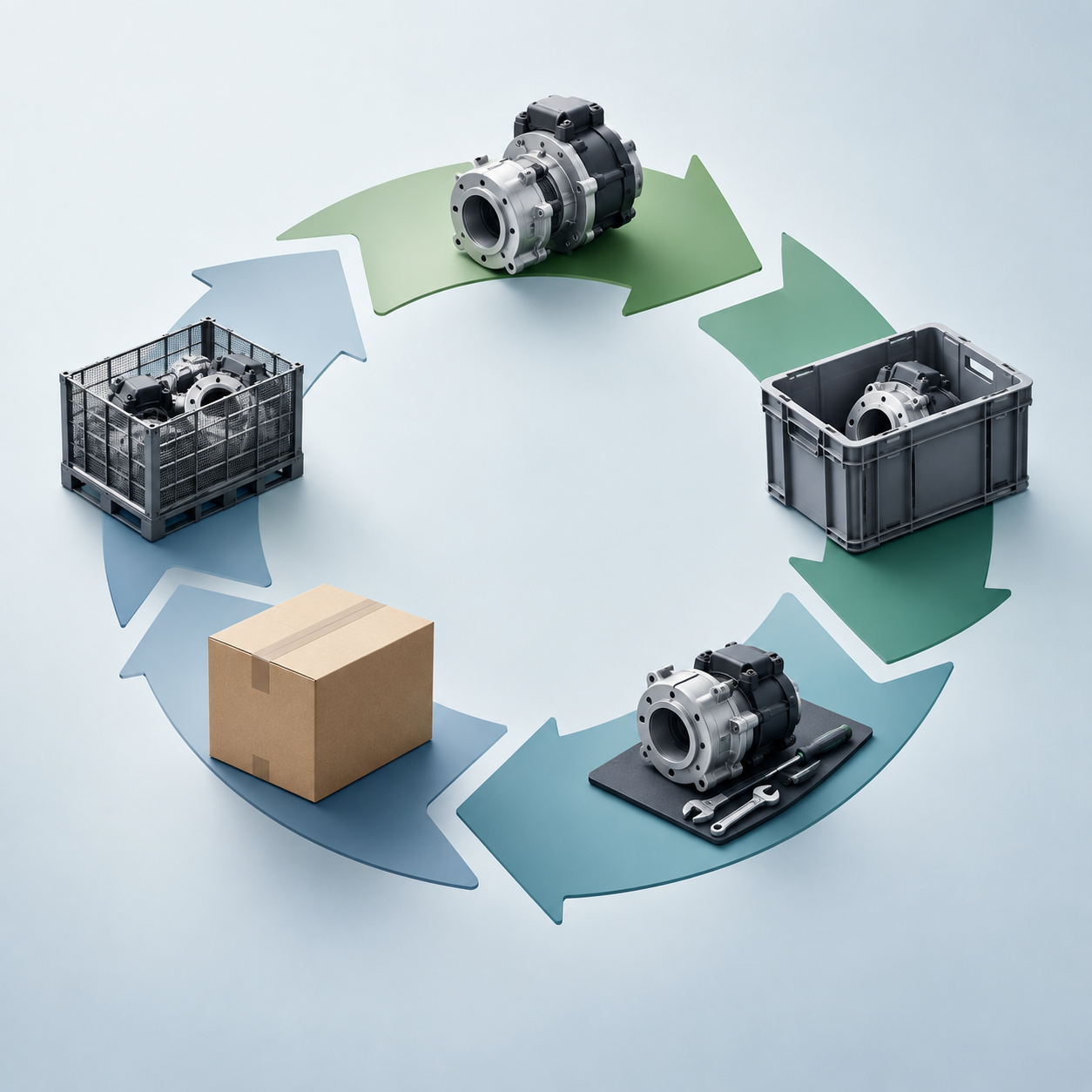
Circular service is simply a disciplined way of managing the reverse flow of parts so that they retain value instead of becoming waste. That includes:
- returning failed parts for analysis or refurbishment
- exchanging “cores” for remanufactured components
- routing reusable assemblies to repair-and-return programs
- recycling low-value or regulated materials through approved channels
- capturing condition and traceability so returned items can be graded fast
The key shift is operational. Instead of treating returns as something that happens “after the job,” circular service treats returns as part of the job.
That mindset matters because returns are not a static process. They interact with scheduling, SLA performance, and first-time completion. If the return loop is slow or unpredictable, it affects which parts are available next week, not just which parts were used this week.
Why returns and recyclability are becoming an FSM issue
Service leaders care about three outcomes: restoring the customer quickly, protecting capacity, and controlling cost. Circular service can support all three.
It reduces repeat visits caused by parts uncertainty
A common cause of repeat visits is parts unavailability or mis-staging. A mature circular program improves availability by feeding refurbished or remanufactured inventory back into the system faster, with clearer rules about which parts can be reused and when.
If your service team has been working to reduce repeat visits through better assignment quality, circular service becomes one more lever. A repair is easier to complete in one visit when the right component is available at the right location, not waiting in a slow return pipeline.
It improves SLA reliability by making parts movement schedulable
Returns, exchanges, and pickups create “hidden work” that steals time from customer appointments. When those tasks aren’t planned, they show up as late arrivals, missed windows, and end-of-day route chaos.
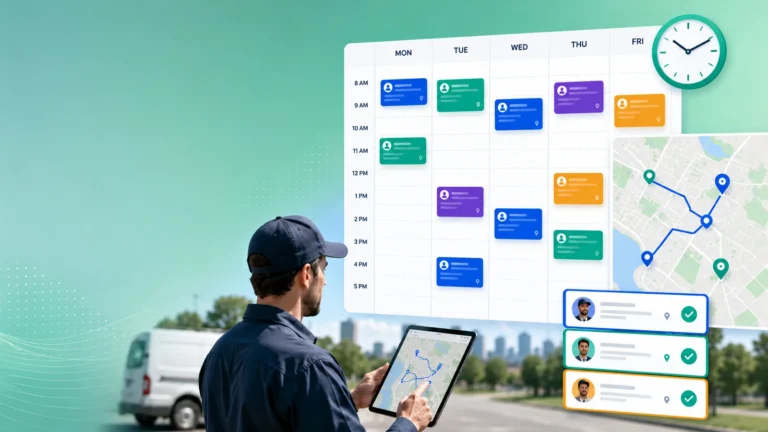
Fieldcode’s PUDO approach frames pick-up and drop-off as structured stops in the workflow, helping organizations plan parts movements like real appointments rather than informal errands. In the same way that a parts pickup can protect a repair job, a planned return can protect the next day’s schedule. PUDO isn’t a sustainability feature. It’s a schedule stability feature.
It turns waste into recovered value
Reverse logistics is typically defined as moving goods from customers back through the supply chain for returns, recycling, or recovery. That recovery can be real money when you are dealing with expensive assemblies, electronics, pumps, compressors, or industrial components.
The value is not just the part itself. It’s also the reduction in expedited shipments, the reduction in stockouts, and the ability to keep reman inventory available in regions where new parts lead times are unpredictable.
The core operational problem: reverse logistics is a service workflow
Many organizations try to “add circularity” by writing a policy. That rarely changes outcomes. The barrier is workflow design.
If a technician must:
- manually create a return,
- print labels,
- find packaging,
- drive to a depot out of route,
- and chase credit weeks later,
then the program will be inconsistent no matter how good the intent is. Technicians will do what they can, but they won’t love a process that adds workload without helping them complete jobs faster.
The circular service model that actually works tends to have four characteristics.
1) Returns are frictionless at the point of service
The best programs make returns easy. That usually means:
- barcodes or scanning for part ID and serial capture
- pre-approved return eligibility rules by job type
- automatic label creation and packaging guidance
- clear “what happens next” status updates so techs trust the process
If the program depends on heroic discipline, it will fail at scale.
2) Grading is fast and standardized
A returned part should be graded quickly into a small number of outcomes: reman eligible, refurbish eligible, repair-and-return, recycle, or scrap.
Fast grading is what turns returns from clutter into inventory. It also reduces disputes. Customers and service teams accept core programs more readily when credits are predictable and the “core return” process is transparent.
3) Parts movement is integrated into scheduling
This is where teams get the biggest operational win. If a return is planned as a stop, it stops being a surprise. That reduces late-day stress and helps dispatch build routes that respect real constraints.
If you’re already thinking in terms of end-to-end automation, this is consistent with the idea that service outcomes improve when workflows are designed to reduce manual coordination. Our overview of zero-touch service discusses how automated decisioning improves reliability when the handoffs and controls are designed intentionally. Circular service benefits from the same discipline: clear handoffs, clear rules, and no “hidden work.”
4) The program closes the loop into forecasting and stocking
Circular service is only valuable when the output is usable inventory. That means returned-part insights must feed demand planning:
- which parts are failing most
- which components are worth reman vs scrap
- where cores are accumulating
- where reman inventory should be positioned to reduce lead time
If you don’t close the loop, you end up with a warehouse full of returned items and very little benefit.
What to measure so it doesn’t become a feel-good initiative
A circular program survives scrutiny when it is measured in operational terms. The best metrics are simple and directly connected to field outcomes.
Return compliance rate that doesn’t punish technicians
Track the percentage of eligible parts that are returned correctly. But don’t use this as a blunt performance tool. If compliance is low, it usually signals friction: unclear eligibility, poor packaging availability, or too many steps.
Core credit cycle time
How long does it take from return initiation to credit issued or inventory graded? This is the heartbeat of a circular program. Slow cycle time destroys trust and availability.
Reman/refurb contribution to fill rate
Measure how much of your parts demand is being met through reman/refurb and whether it reduces stockouts. If the contribution is low, the program may be collecting returns but failing to convert them into usable supply.
SLA and first-time completion impact
Tie the program back to service outcomes: parts-related reschedules, repeat visits driven by parts, and “time to part available” for common failure modes. A circular program that doesn’t improve availability and completion is usually missing the integration into planning.
Reverse logistics cost per return (and where it’s going)
Reverse logistics has costs: transport, handling, inspection, and processing. The goal is not to pretend those costs don’t exist. The goal is to run them efficiently, so recovered value exceeds process cost.
Where circular service typically breaks down
Most circular programs fail in predictable ways.
They underestimate exceptions. Damaged packaging, missing labels, incomplete serial capture, and mixed-condition returns create rework and slow grading.
They don’t align incentives. If technicians carry the work but operations captures the benefit, compliance drops.
They treat returns as “warehouse work.” Returns start in the field. If the field workflow is weak, the warehouse will be overwhelmed with inconsistency.
They ignore customer communication. Customers want clarity: is a core required, what’s the timeline, and what happens if it’s not returned? If this is vague, the process becomes a dispute, not a loop.
Circular service is operational design. Not PR.
A practical way to start without boiling the ocean
The simplest starting point is to pick one high-value part family with frequent replacements and strong reman potential. Then:
- define eligibility and return requirements clearly
- make return initiation scan-based and low-friction
- schedule pick-up/drop-off steps like real work when needed
- measure cycle time and availability impact over 8–12 weeks
- expand only after the loop is stable
That approach avoids the most common trap: launching a “circular” program that collects returns but doesn’t improve service outcomes.
If you want circular service to matter, it has to show up where service leaders feel pain: repeat visits, SLA misses, parts shortages, and technician frustration. Build the reverse flow as part of the service workflow, and the benefits become operational, not theoretical.